The Reunion
A spec campaign, in the cox’s words
The photograph is still tacked up inside the boathouse door, curling at one corner. Five of us on the dock, the summer we were twenty-two. A clothing company wanted a rowing crew for its catalogue, and we were a rowing crew.
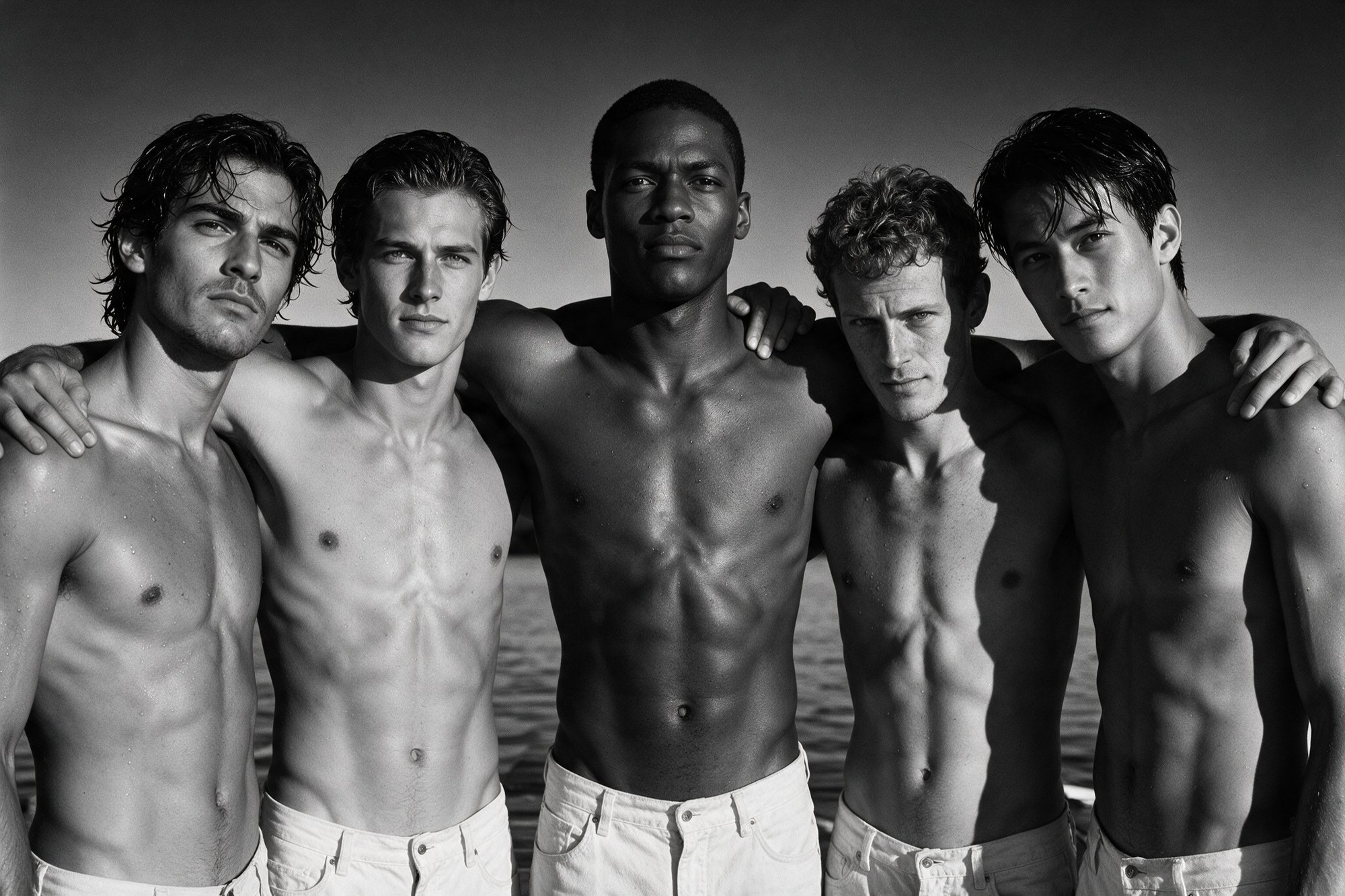
Look at Dom on the left, giving the camera everything he had. Look at Wes. Nobody is smiling, because we had agreed that smiling was for crews that lost. I’m second from the right, doing something with my eyebrows that I believed to be dangerous.
They paid us in sweaters.
We were a coxed four. Wes rowed stroke, Marcus sat at three, Dom at two, Ken in the bow. I was the cox, the light one in the stern with the rudder lines, facing the four of them while they rowed backwards. I was the only one who could see where we were going. “Brendan,” Marcus told me once, “if you ever run us into a bridge, the last thing I see will be your face, and I’ll know.”
We came back at thirty-seven and took it again. That was Dom’s idea. Nobody had to be asked about the shirts. Every one of us had spent fifteen years quietly keeping in shape in case this exact thing came up, and Dom had his off before the camera was out of its bag.
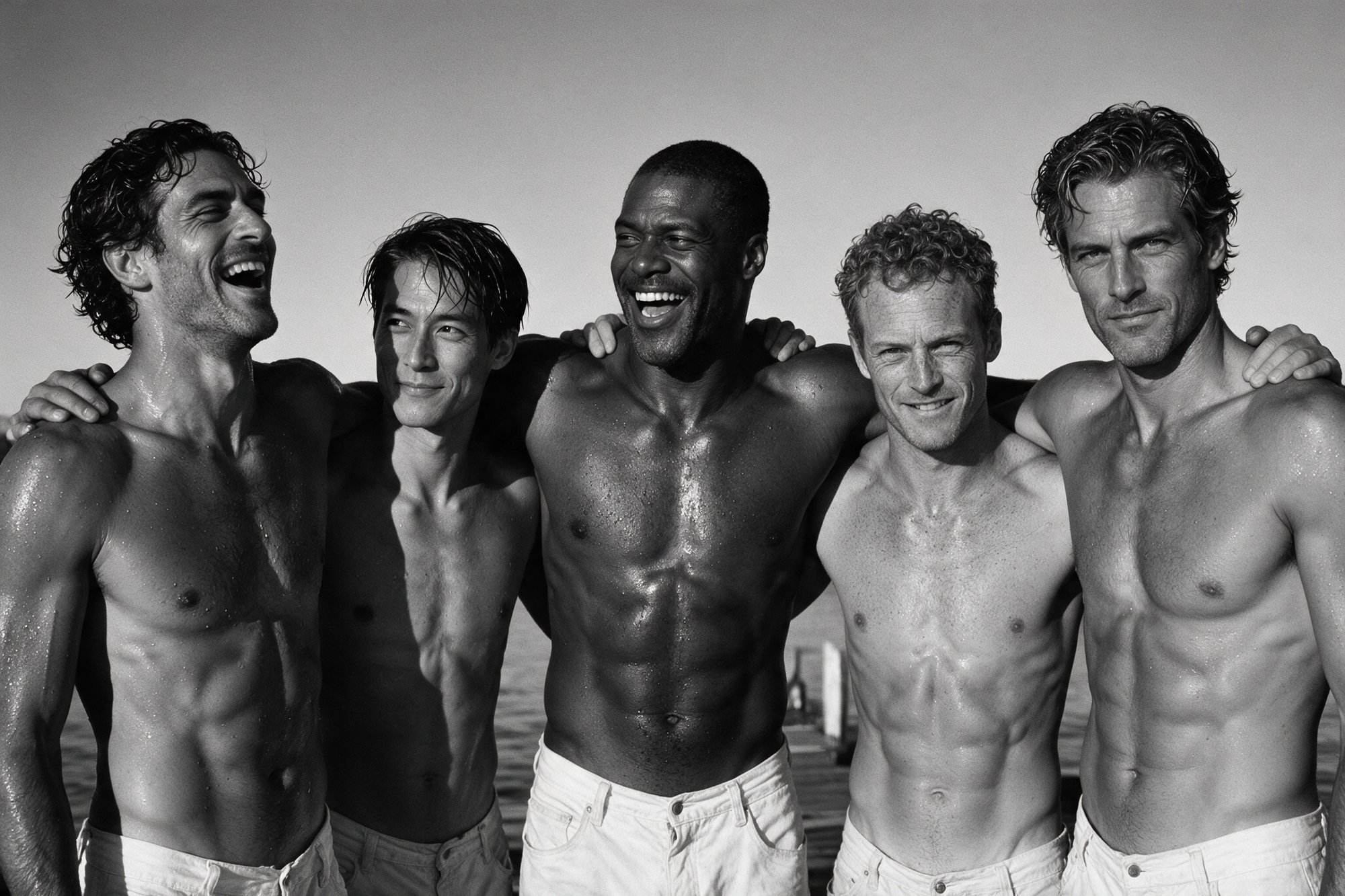
The only thing we couldn’t do any more was keep a straight face. Everybody cracked except Wes, who had decided one of us ought to hold the line.
This summer made it thirty years. I drove up early and Wes was already there, because Wes is always already there. He had an oar down off the rack and stood on the dock with it, looking at the lake as if it had been keeping something from him.
“You’re late,” he said.
“It’s seven in the morning.”
“I know what time it is.”
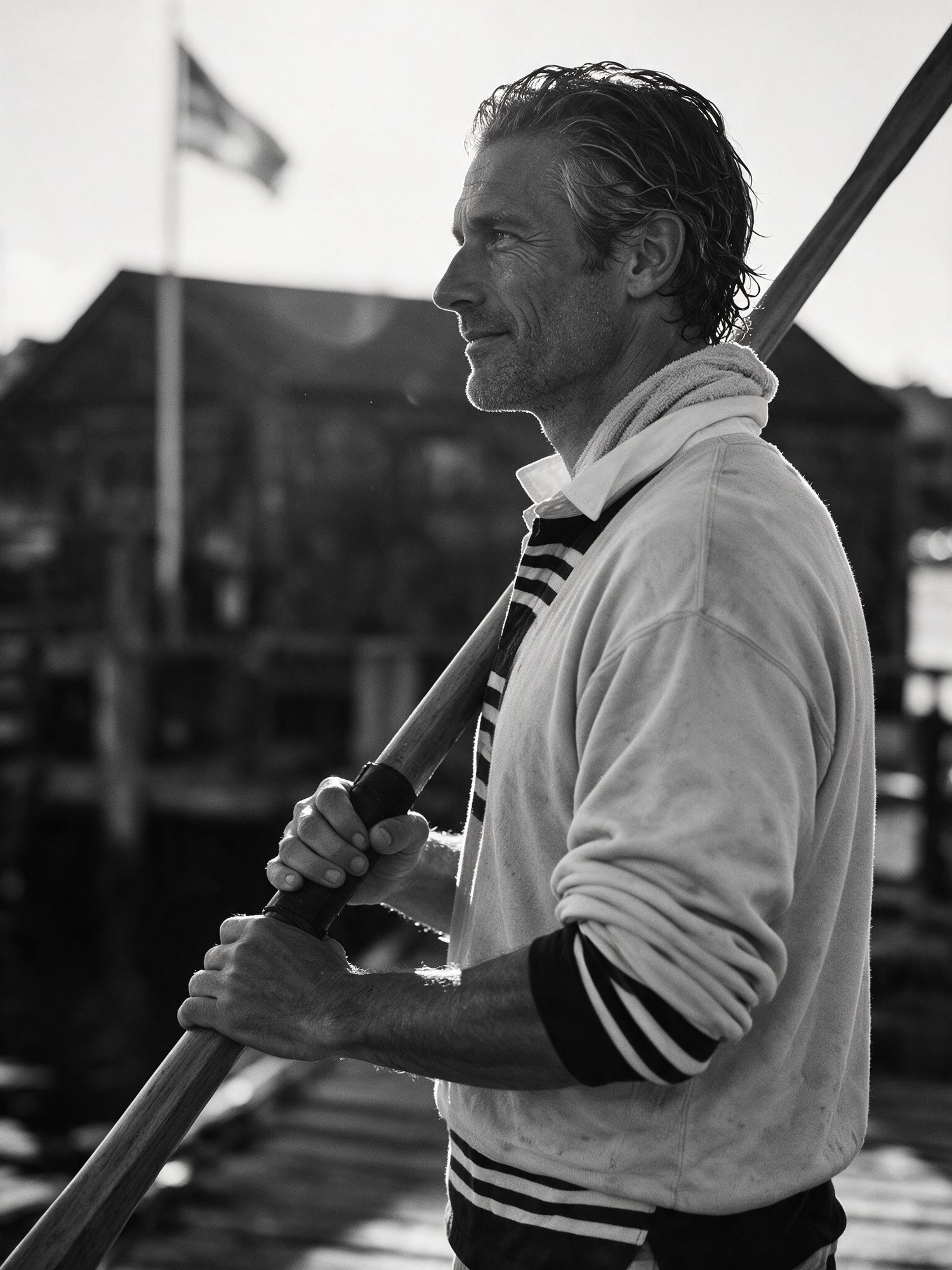
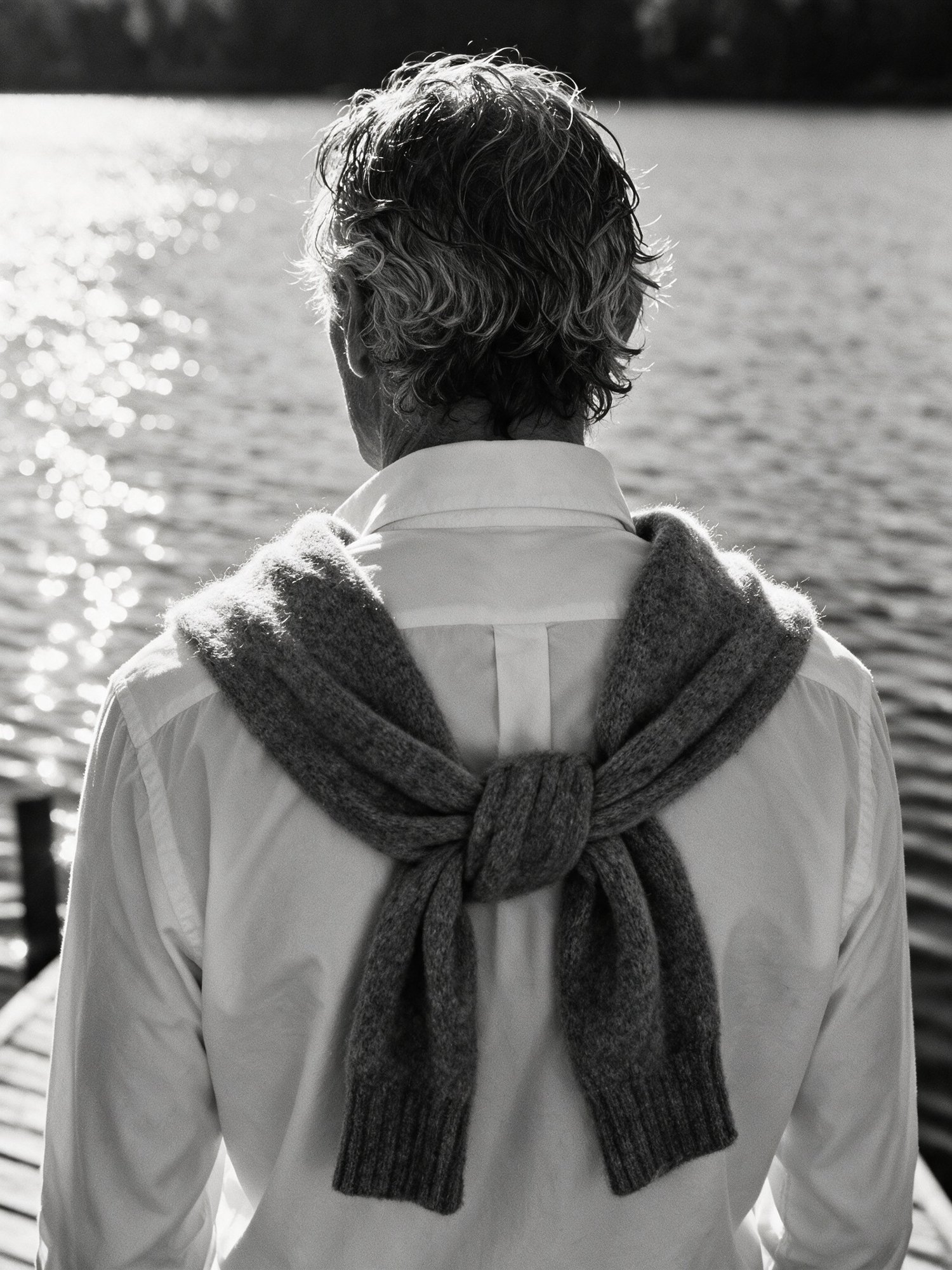
By the time the sun was properly up he had a sweater knotted round his shoulders. He has worn one that way since he was nineteen, and I have never once seen him put it on.
By noon the others had come, and we did what we always do, which is stand in the boathouse doorway and tell the same six stories. Something was off, though, and it took me an hour to find it. Everyone was being careful. Ken asked about my knee. Marcus held a door for me. Dom, who once shaved half my head on a bus, wanted to know if I was sleeping all right.
These men used to throw me in lakes.
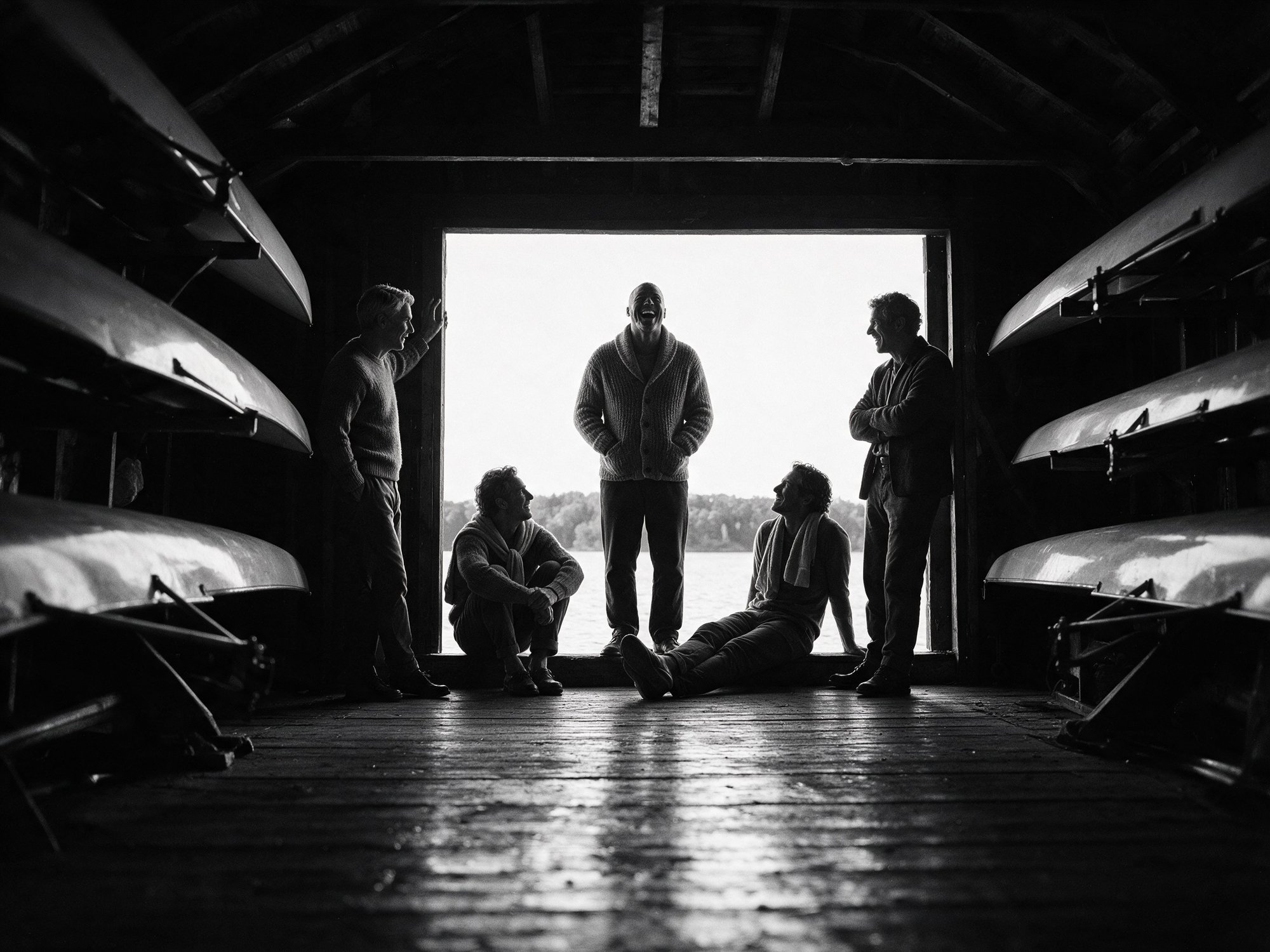
Rowing has a custom. When a crew wins, the cox goes in the water. Those four put me in every river we ever won on, in my clothes, once with my wallet still in my pocket. It was the nearest any of us came to saying anything.
Nobody had laid a hand on me all day.
We walked out to the end of the dock, because that is where we always end up. I stood there in a navy blazer I happen to love and understood that nobody was going to do it. We were fifty-two. We had become polite.
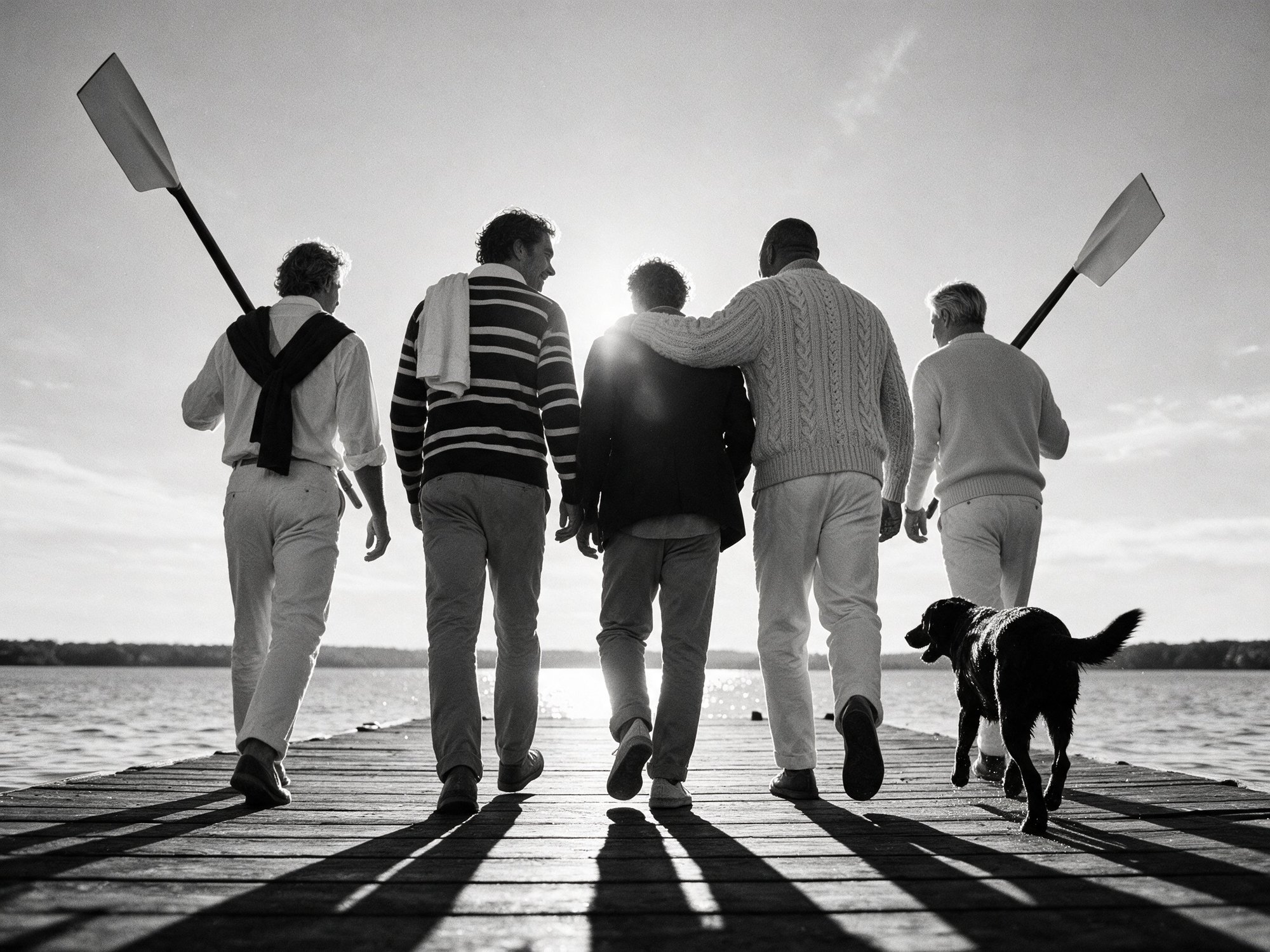
So I went myself. Three steps, blazer and all, and off the end of the dock with my arms out.
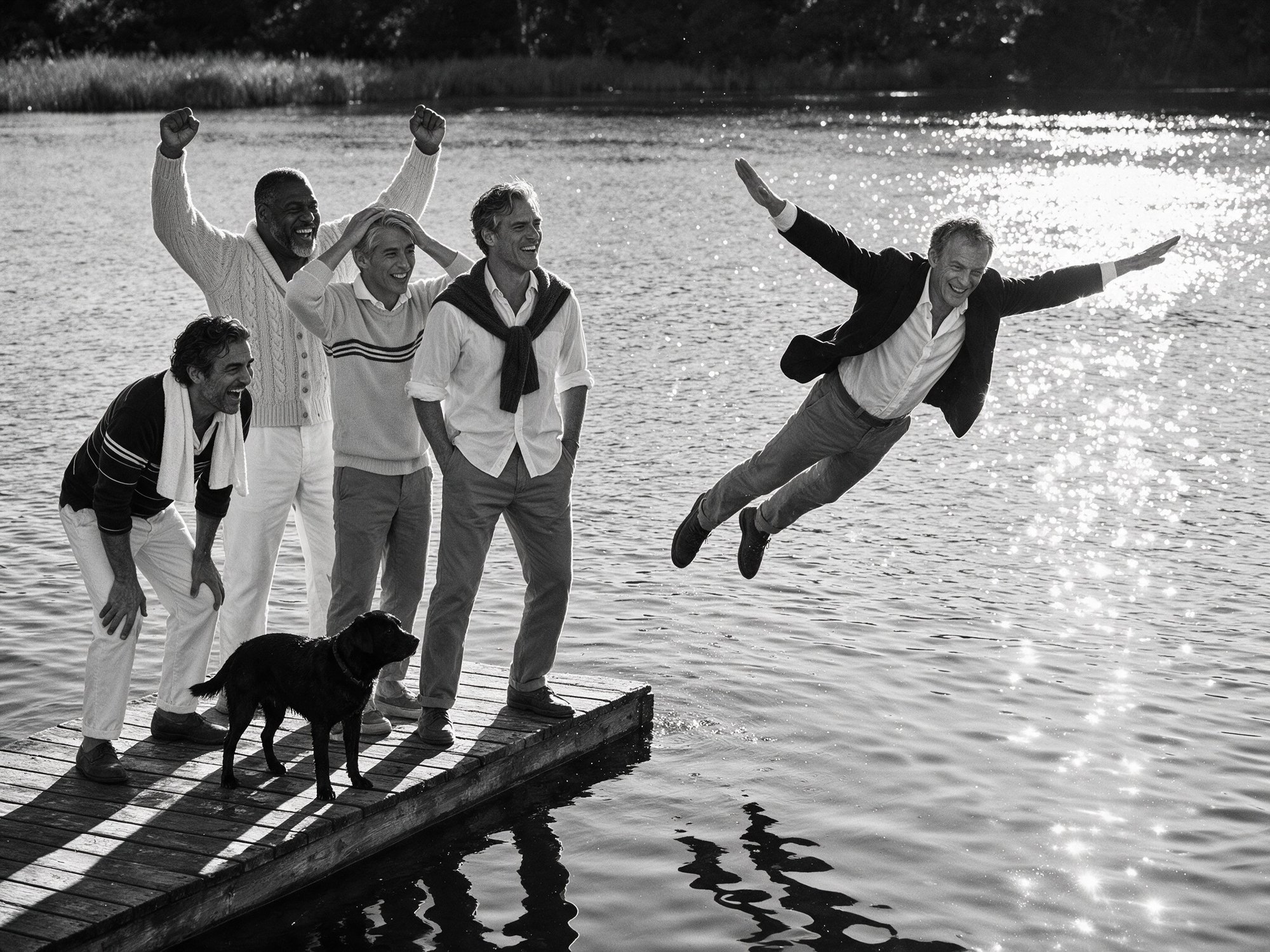
Marcus says I looked like a man who thought he could fly.
For about a second, I did.
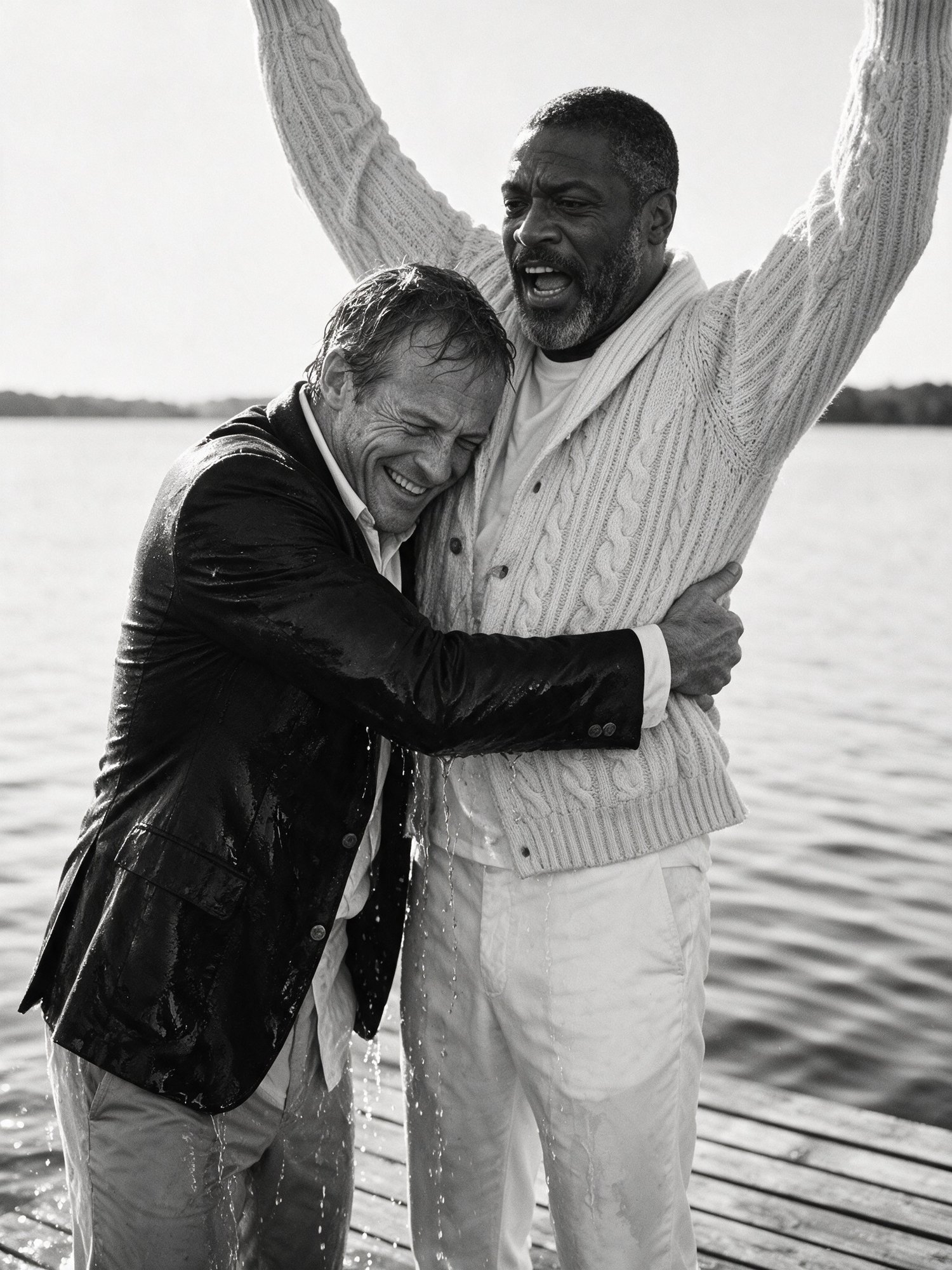
The lake was a good deal colder than it had been at twenty-two. When I came up they were howling. Marcus got down at the edge of the dock to haul me out, still laughing, in a cream cardigan that had never been near water in its life.
“Give me your hand,” he said.
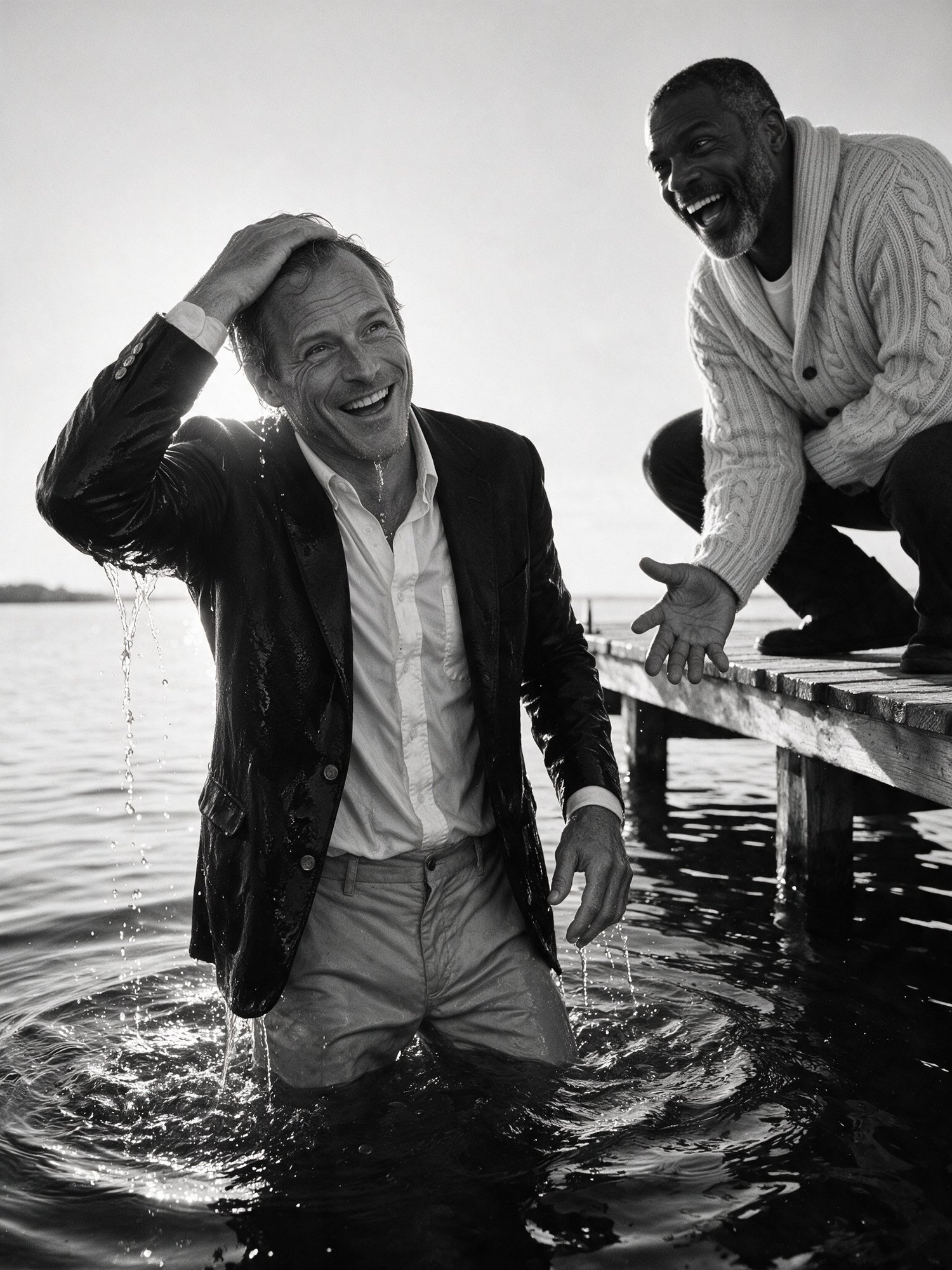
I gave him my hand. Once I was up on the boards I gave him the rest of me. He stood with his arms in the air like a man being robbed.
“No,” he said. “Brendan. No. This is wool.”
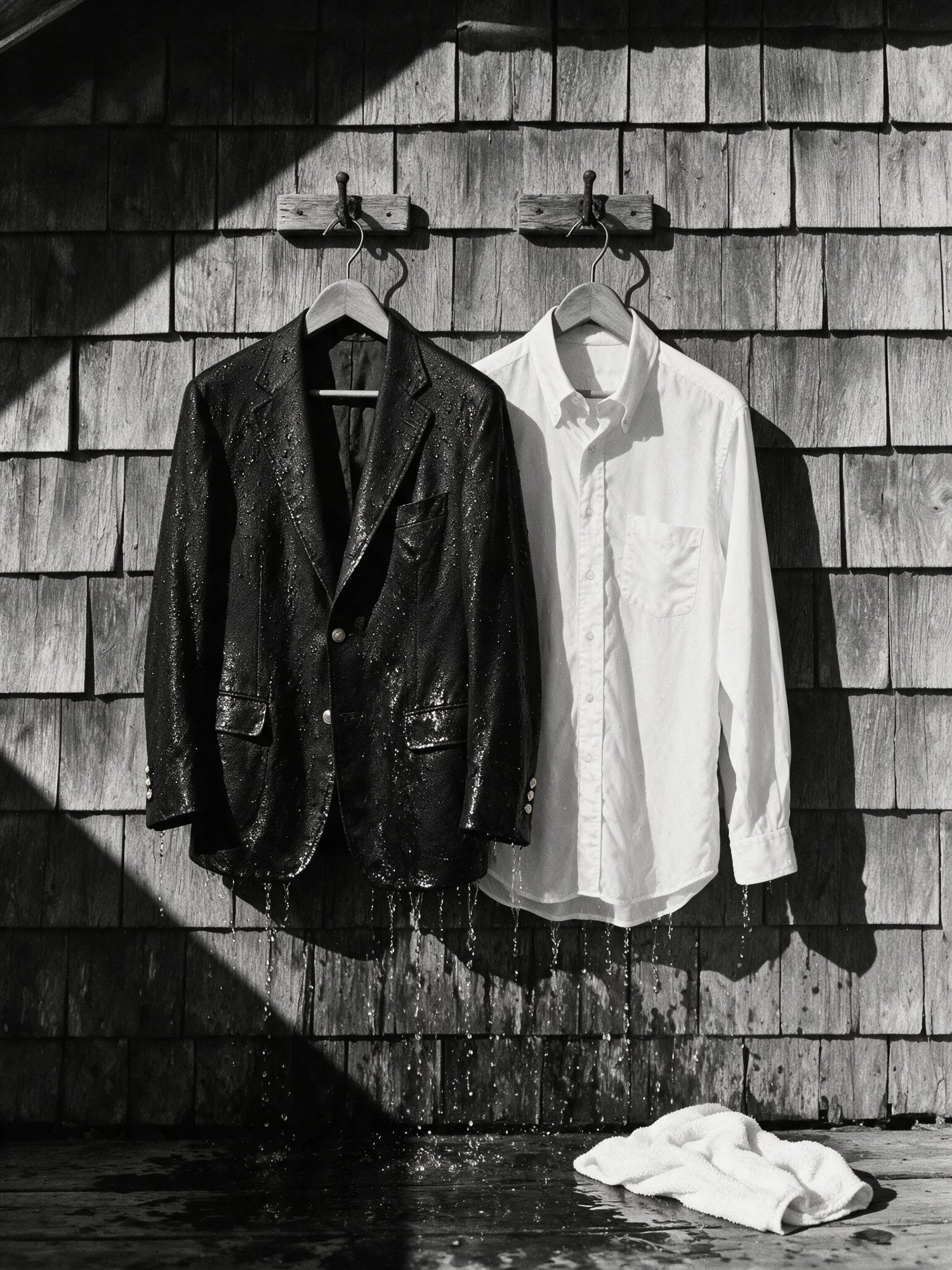
The blazer went up on the boathouse wall to drip. Marcus’s cardigan got away with a few drops, though to hear him tell it I had held it under.
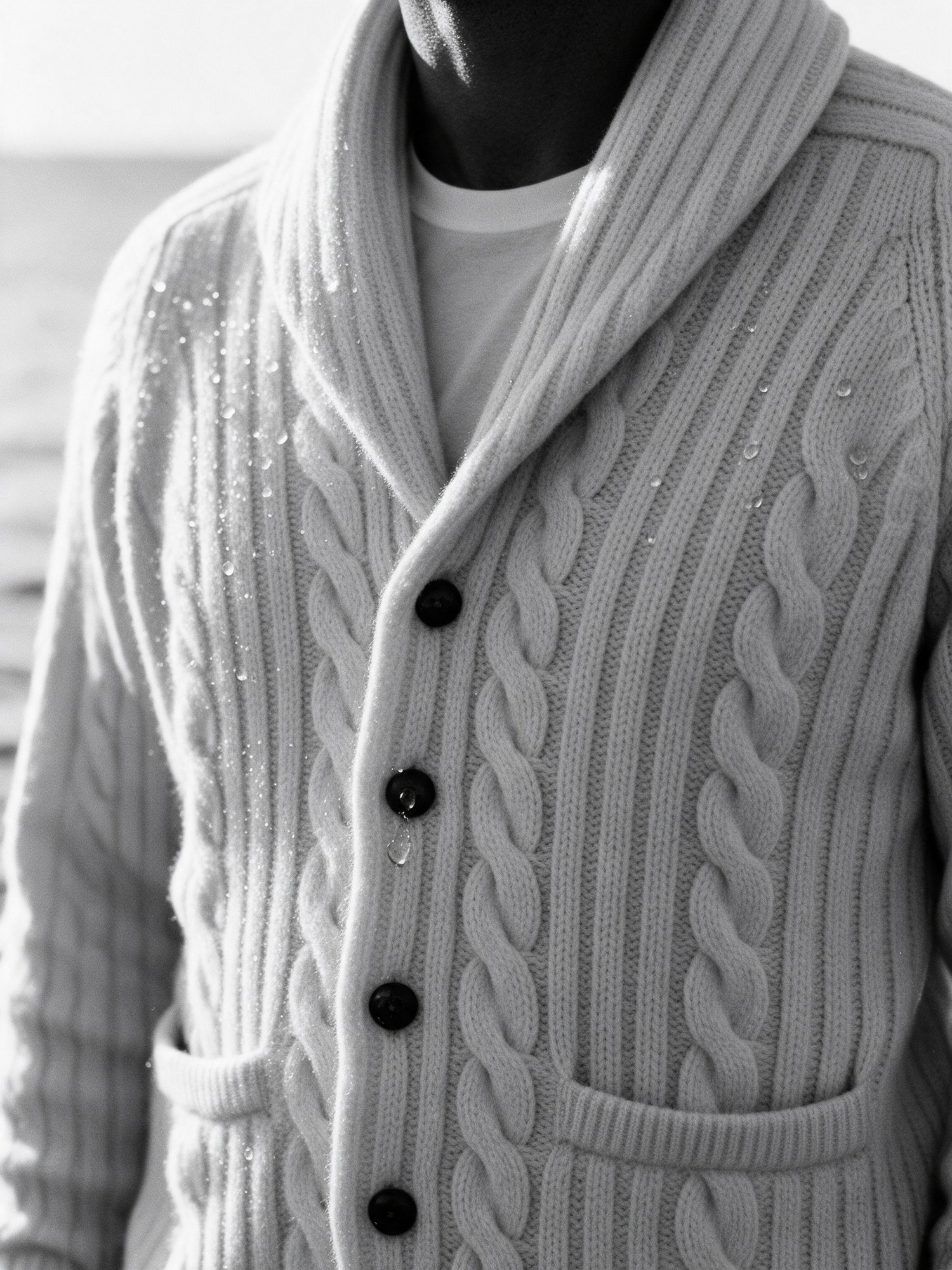
After that there was no point in anyone staying dry, and they all went in.
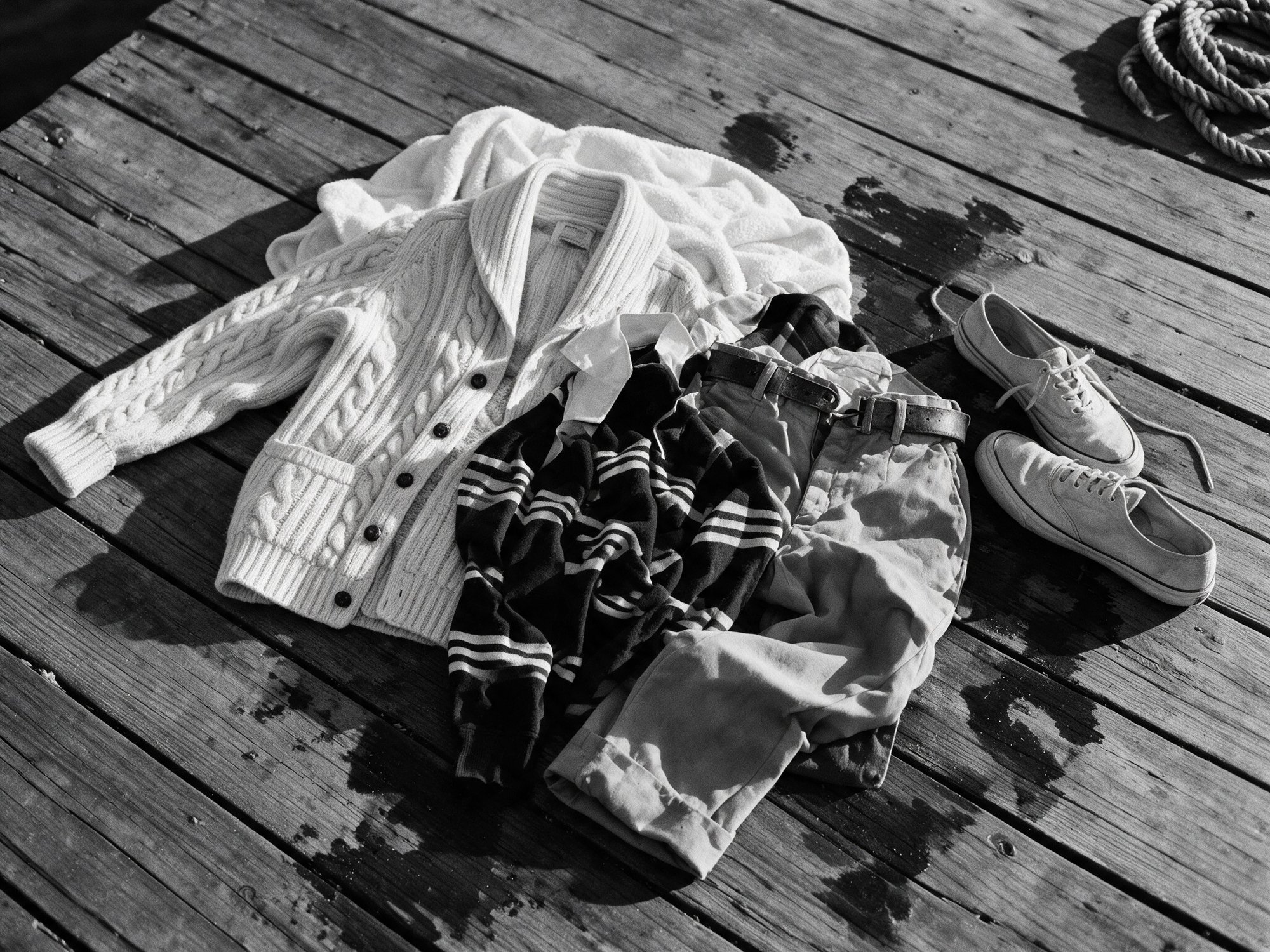
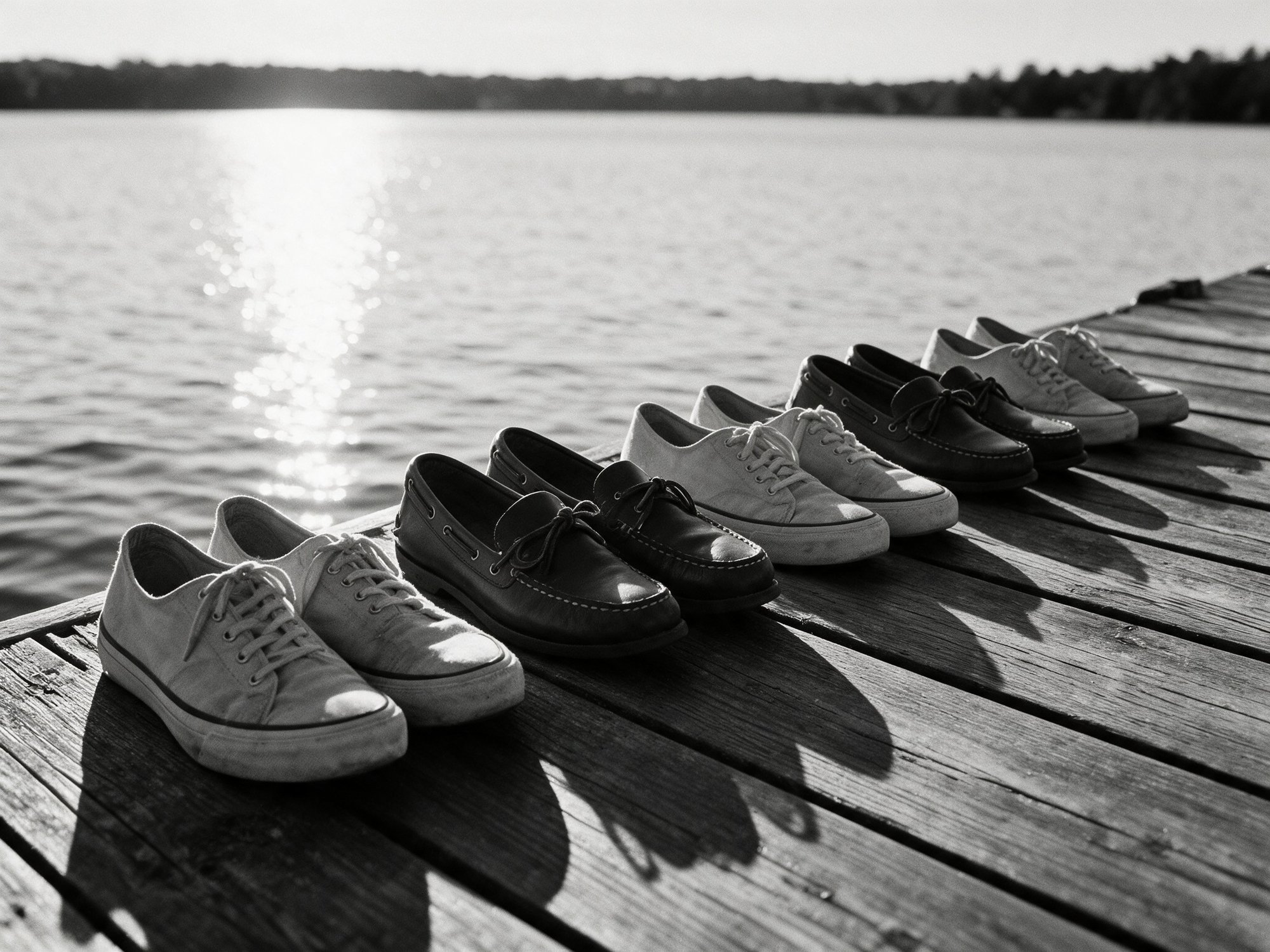
I would like it on the record that they took their shoes off first and lined them up along the dock in pairs. I put mine at the end to dry, so as not to spoil the line. That is how wild we were. It is how wild we have always been.
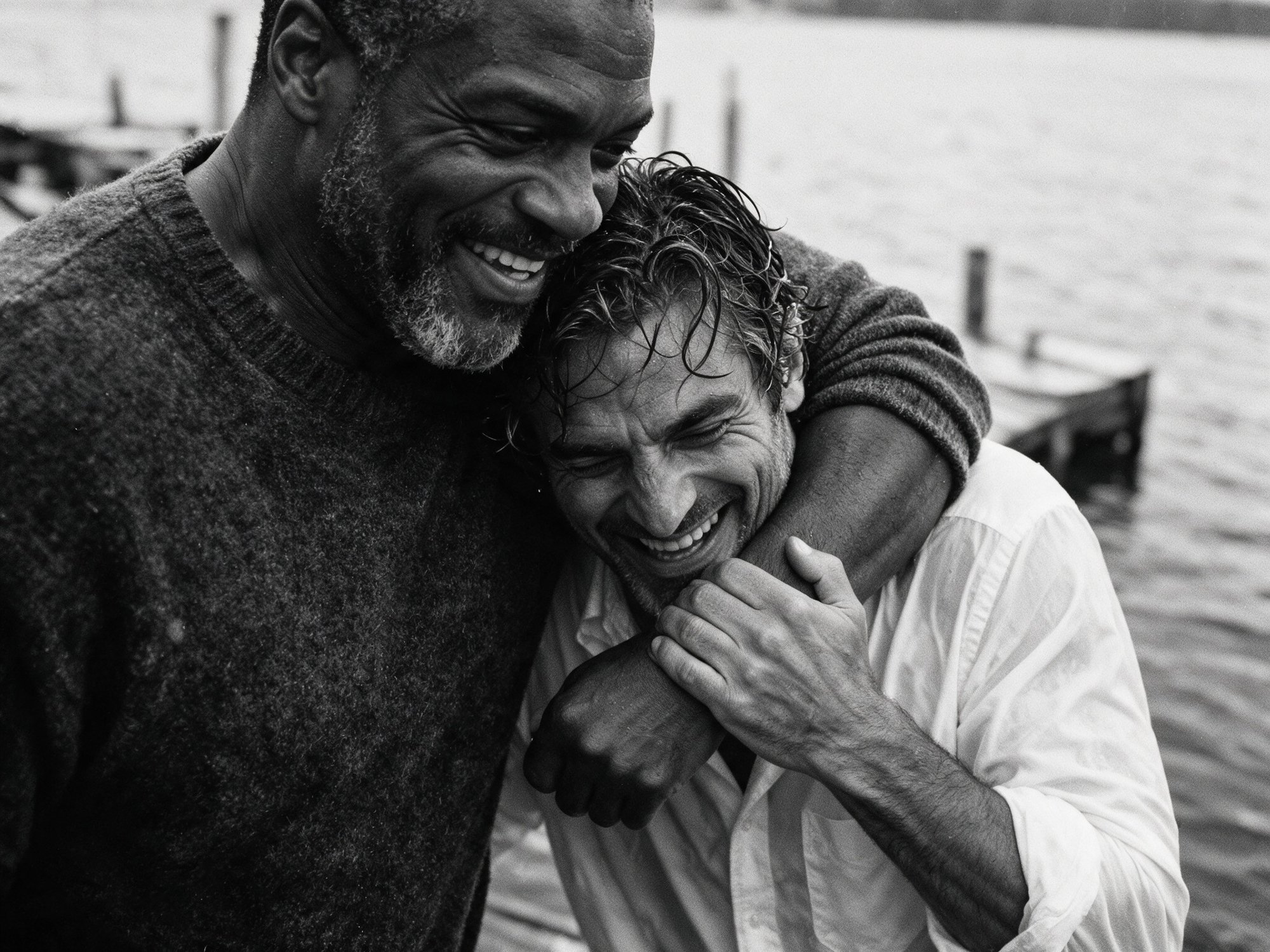
Marcus found a dry sweater in the back of somebody’s car and forgave me the way he forgives everyone, by putting the nearest man in a headlock. The nearest man was Dom, who had done nothing. Dom has been taking my punishments for thirty years.
Nobody asked about my knee again.
When we left there were sweaters on the bench by the door. There always are. Somebody forgets one every time, and in thirty years not one of us has asked how a cold man forgets his sweater.
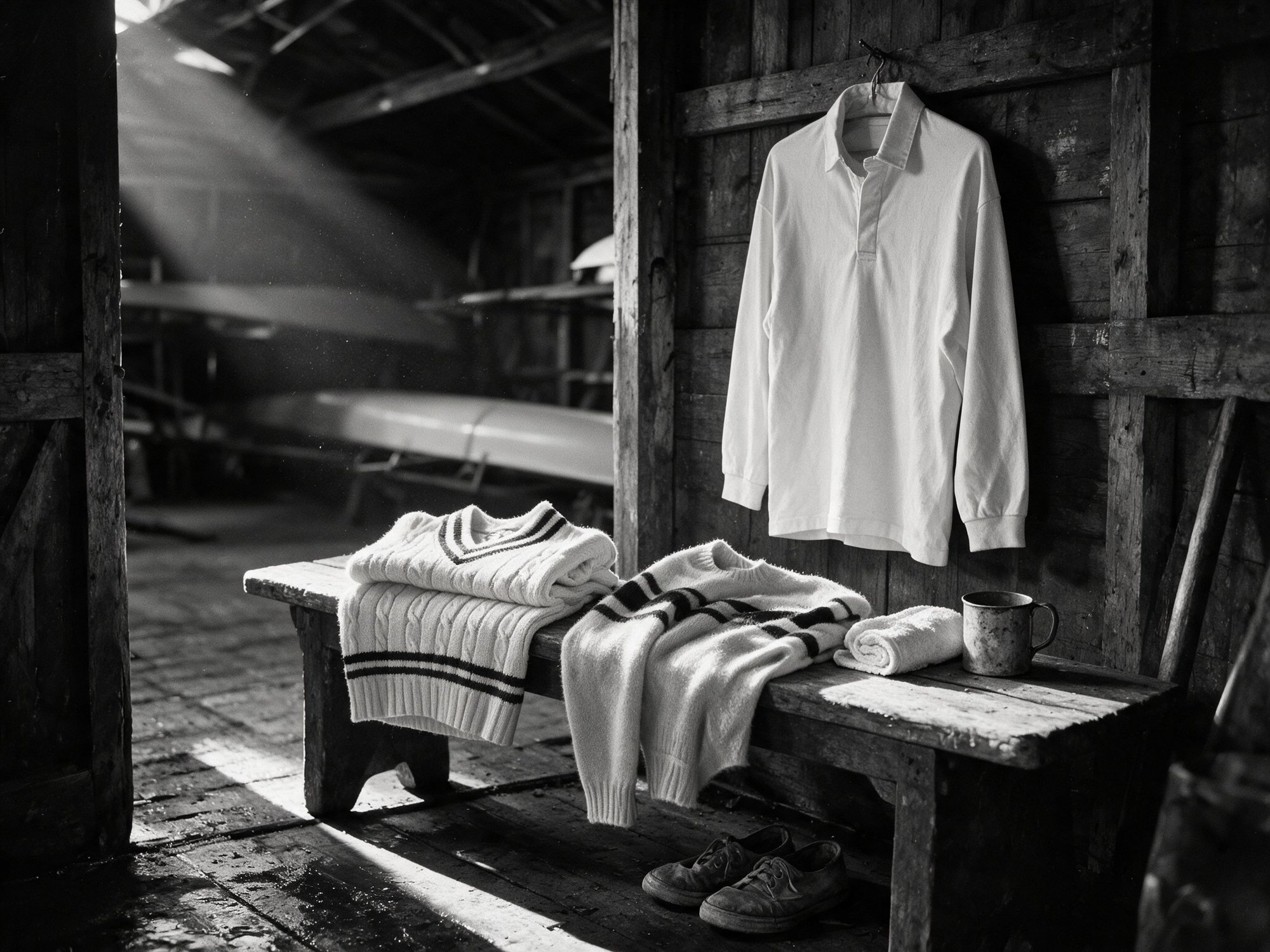
Somebody will have to come back for them.
The Reunion is a spec campaign. The five men, the boathouse and all three summers are invented. The clothing is real; the brands aren’t named, and none of this was commissioned by or made with the clothing’s makers.
Images generated and finished by Finalbyte.