Night out
The case study: how the series was made
The brief
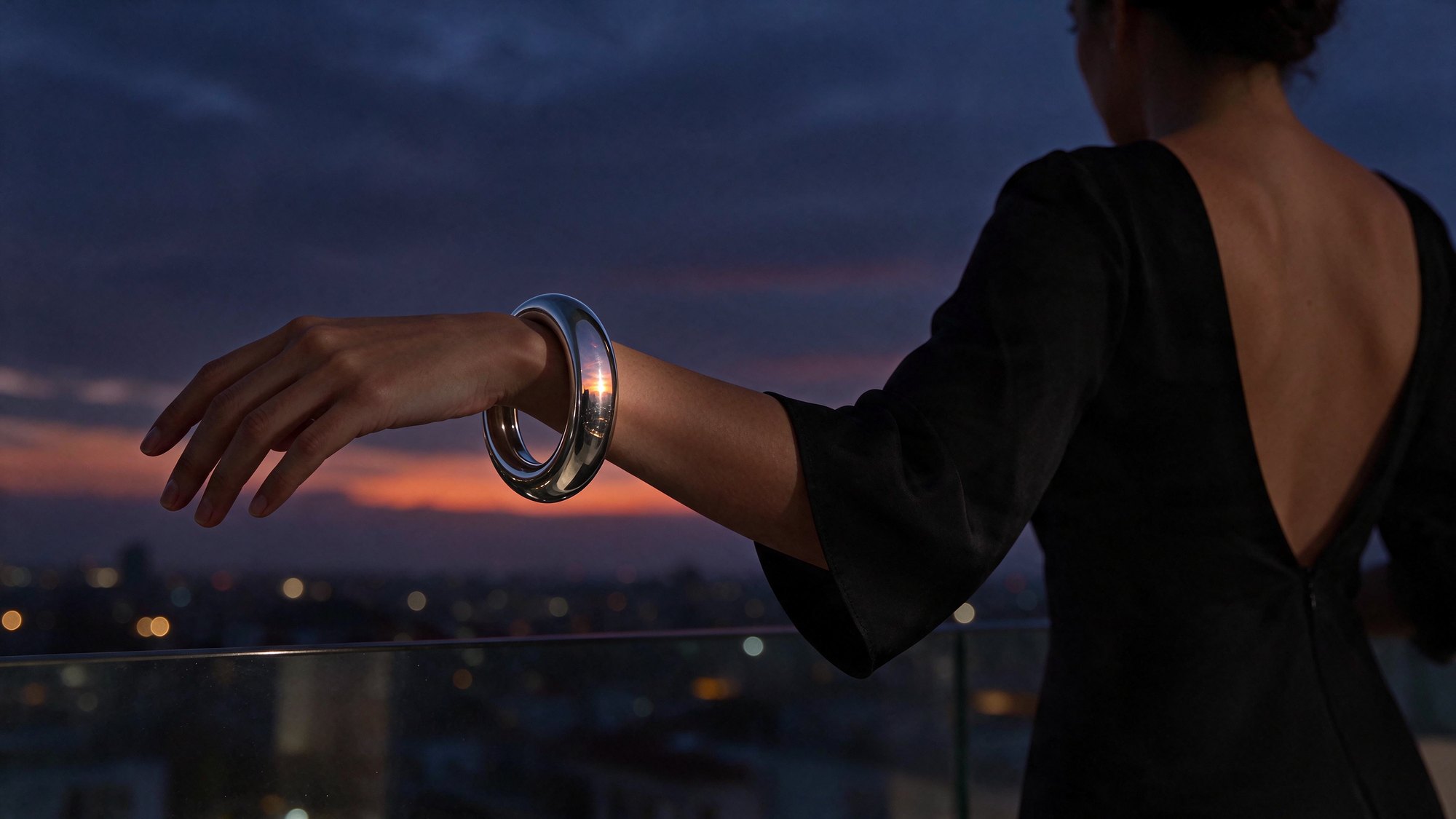
One woman, one black gown and one evening, told in seven frames. She steps out at dusk, takes a taxi to the opera, has dinner and a drink, walks home, and is back on her balcony at first light.
On her left wrist is a real piece of jewelry, a plain bangle of polished silver. The test was whether generated images could hold that one object to its true shape and size through seven different scenes, and keep it the brightest thing in every frame.
That is a finishing problem as much as a generating one. Finalbyte is a post-production house with a sharp eye for these adjustments, and the series was checked the way a product is checked on a shoot.
Choosing the piece
The series began with a different bracelet, a sculpted cuff with an uneven edge. The generator drew it slightly wrong every time, and wrong in the same way, so discarding frames was never going to fix it.
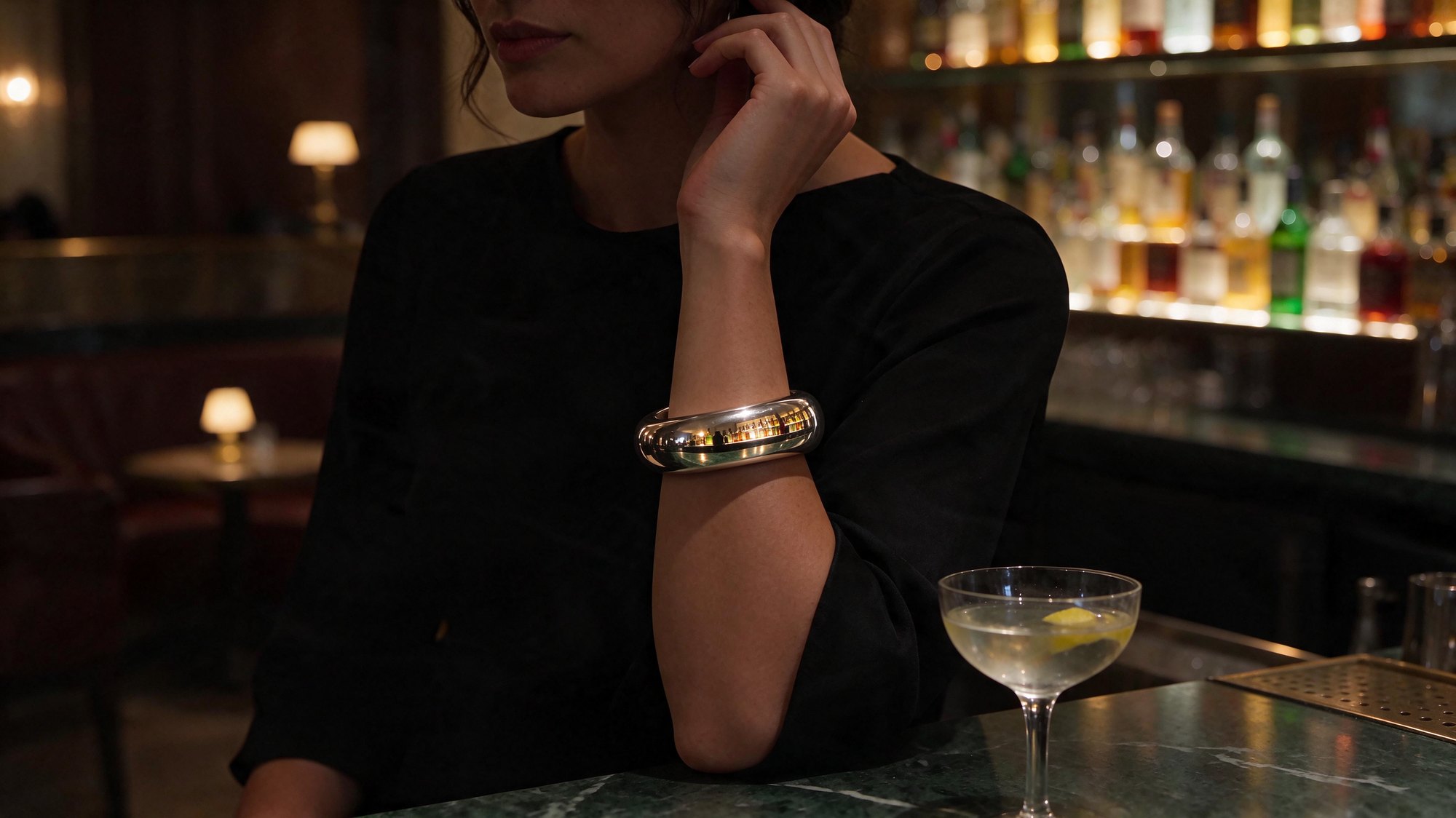
The product was changed. The replacement needed a simple, even shape that would survive being redrawn, and a broad curved surface that bends a reflection the way polished metal does. Five pieces were tried in the same two scenes. The bangle matched the real thing in six of its first eight frames, and it was chosen.
Casting
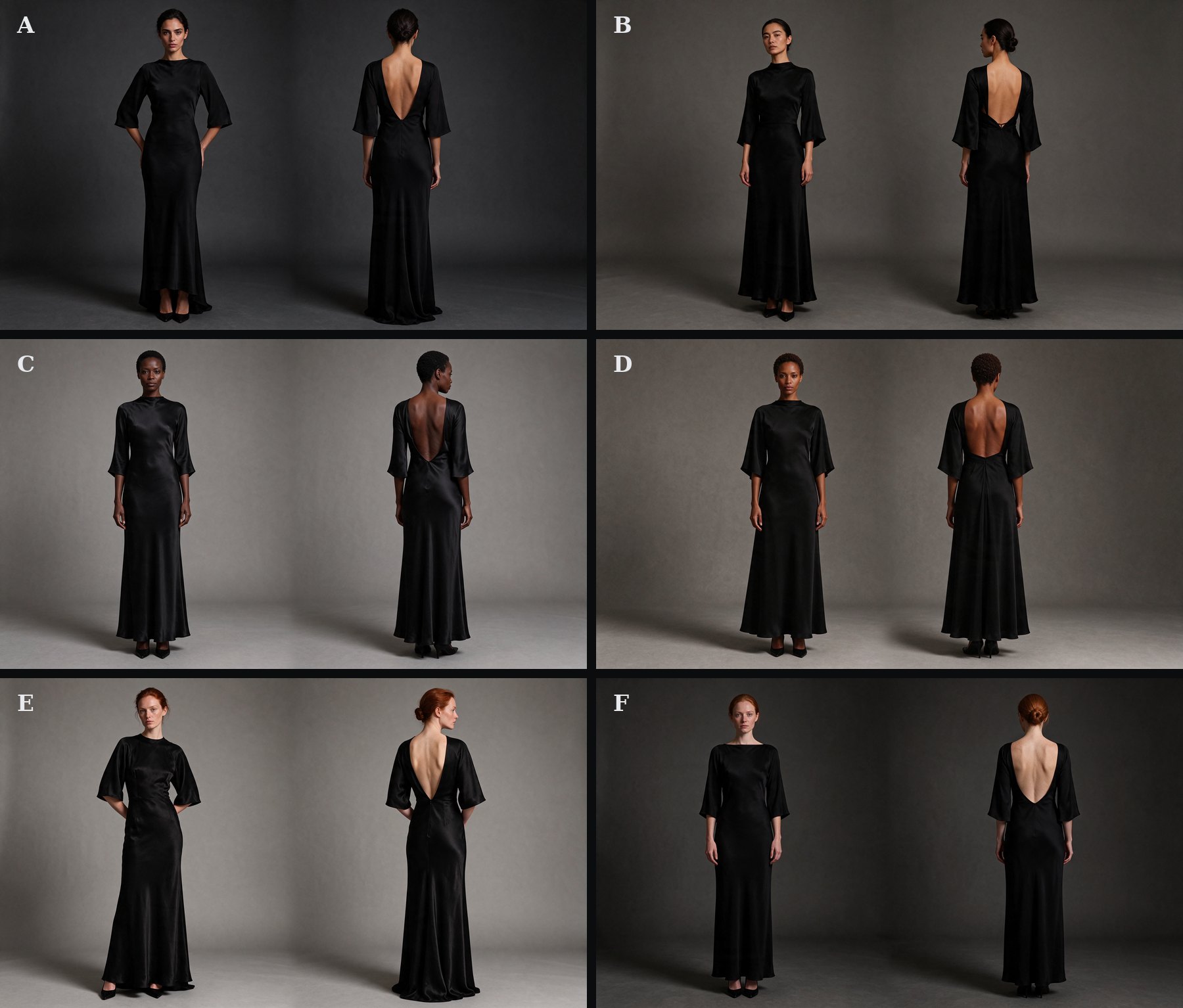
Six invented women were put on one sheet, lettered A to F, all in the same gown. A was chosen. None of them is a real person.
The gown was written with the bangle in mind: floor-length black silk with an open back, and sleeves that stop at mid-forearm so both wrists stay bare.
Seven poses
The first full board had a fault. Most of the frames repeated the pose of the opening balcony shot. That frame had been used as the guide for the look, and its pose came along with it.
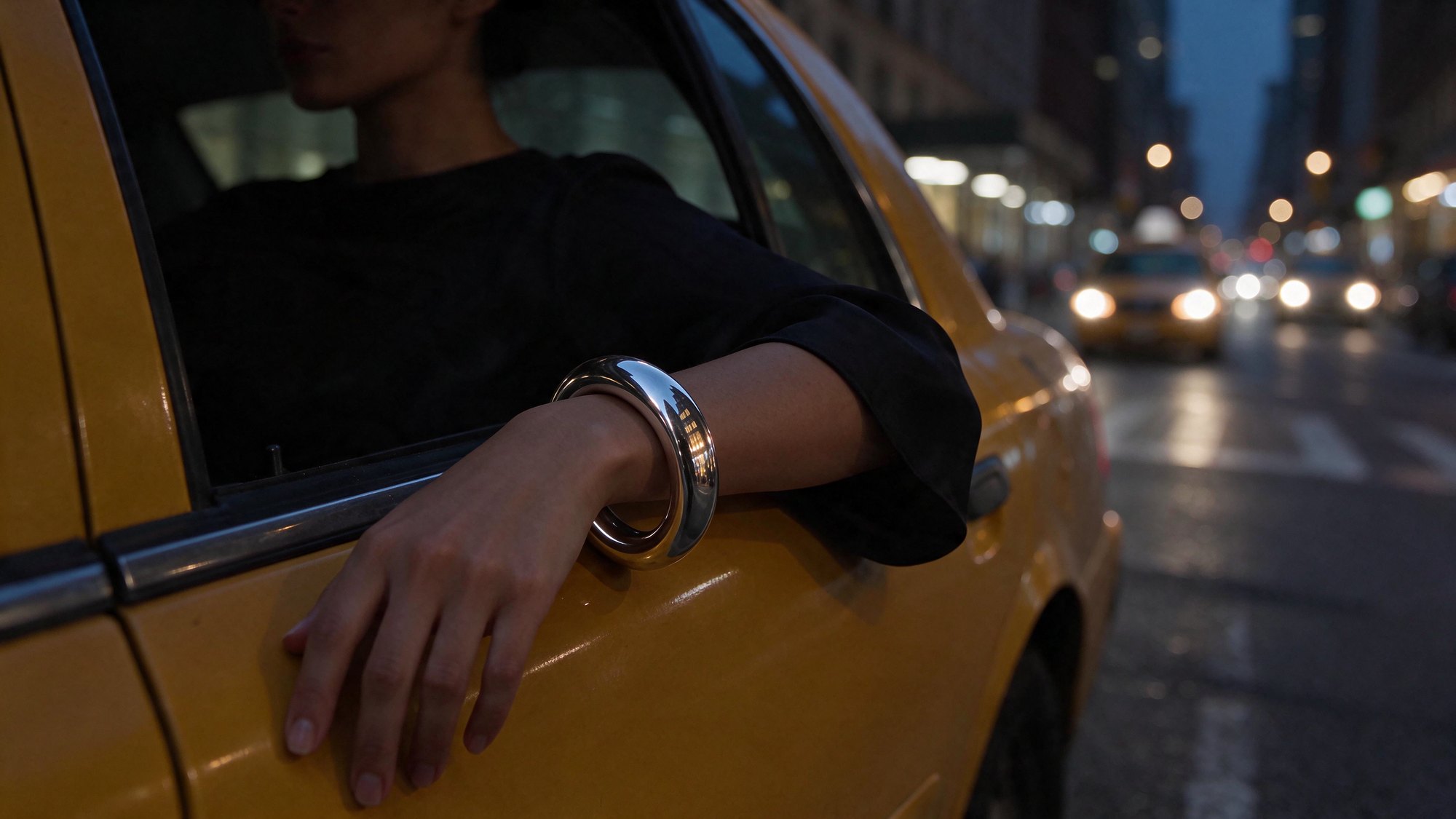
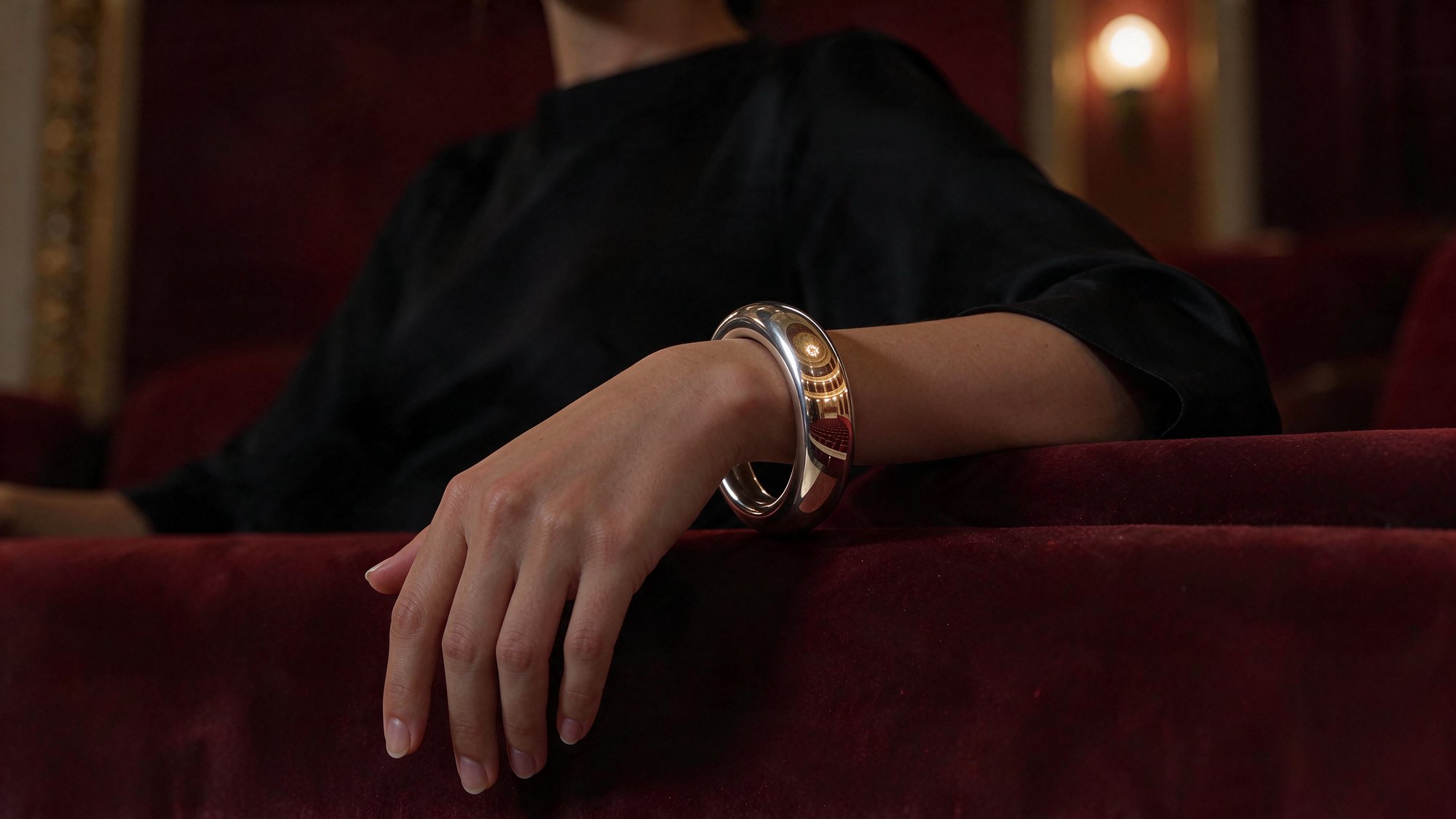
The guide was dropped and a pose was written for each scene: an arm resting on a taxi window, a hand draped over a velvet ledge, a raised glass.
The light
Every frame is held dark on purpose, with the silver at normal brightness, so the eye goes to the wrist first. The shadows stay open and nothing is crushed to black.
The light on the bangle took several rounds. A hard beam looked harsh. Asking for a glow made the silver look lit from inside. The version that stayed is a soft light from somewhere out of frame, with no lamp visible in the reflection.
The reflections
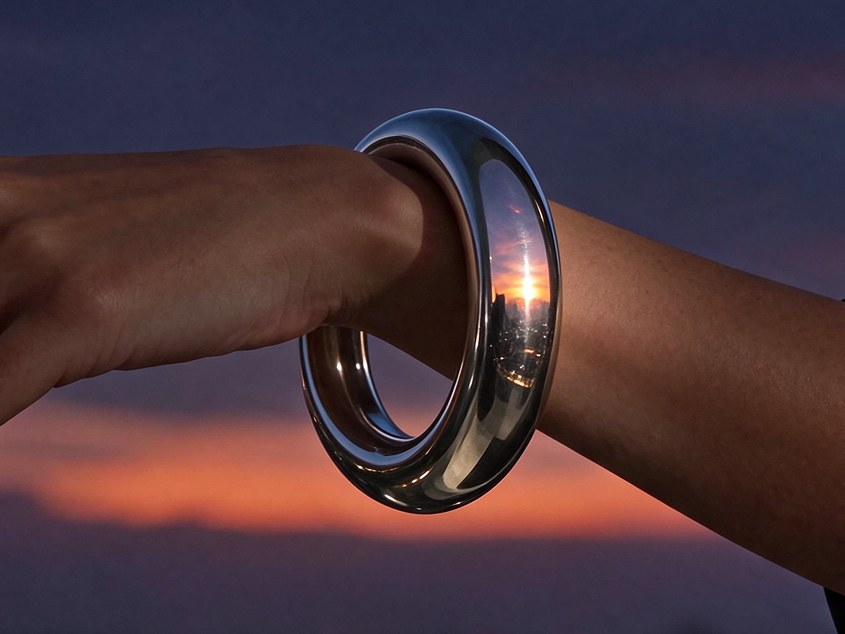
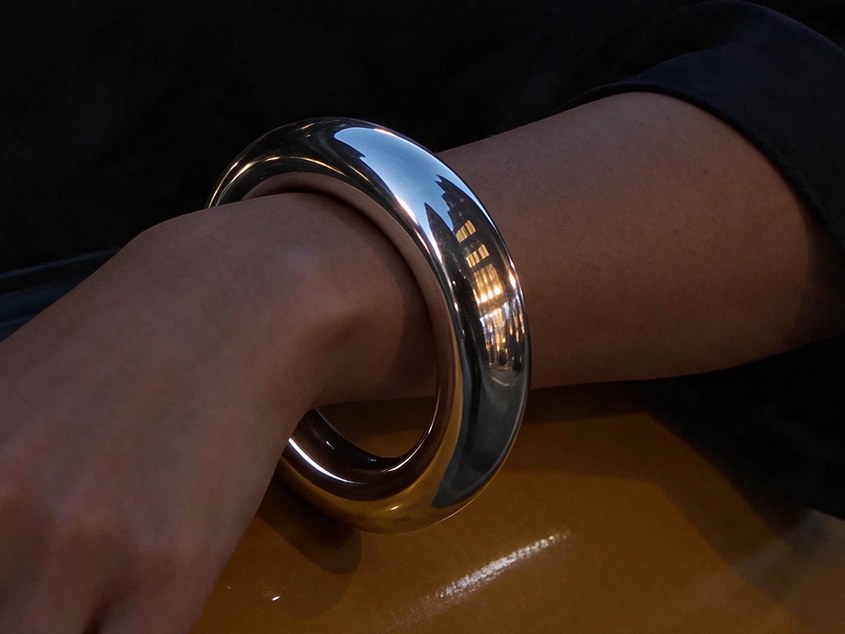
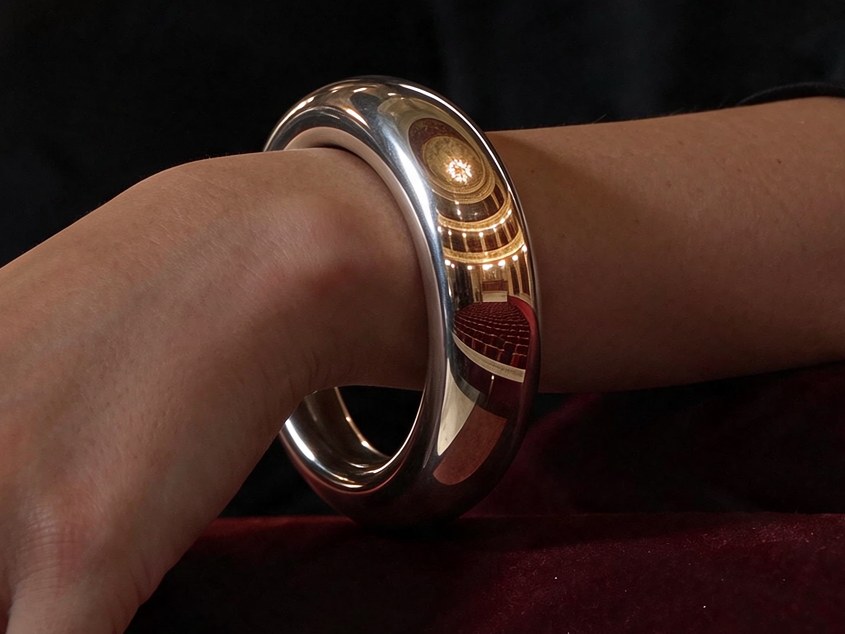
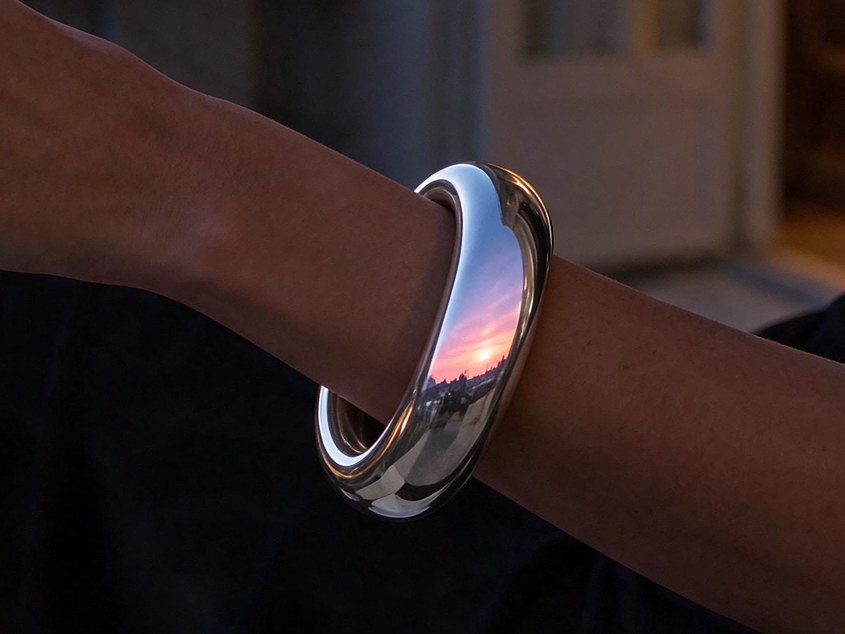
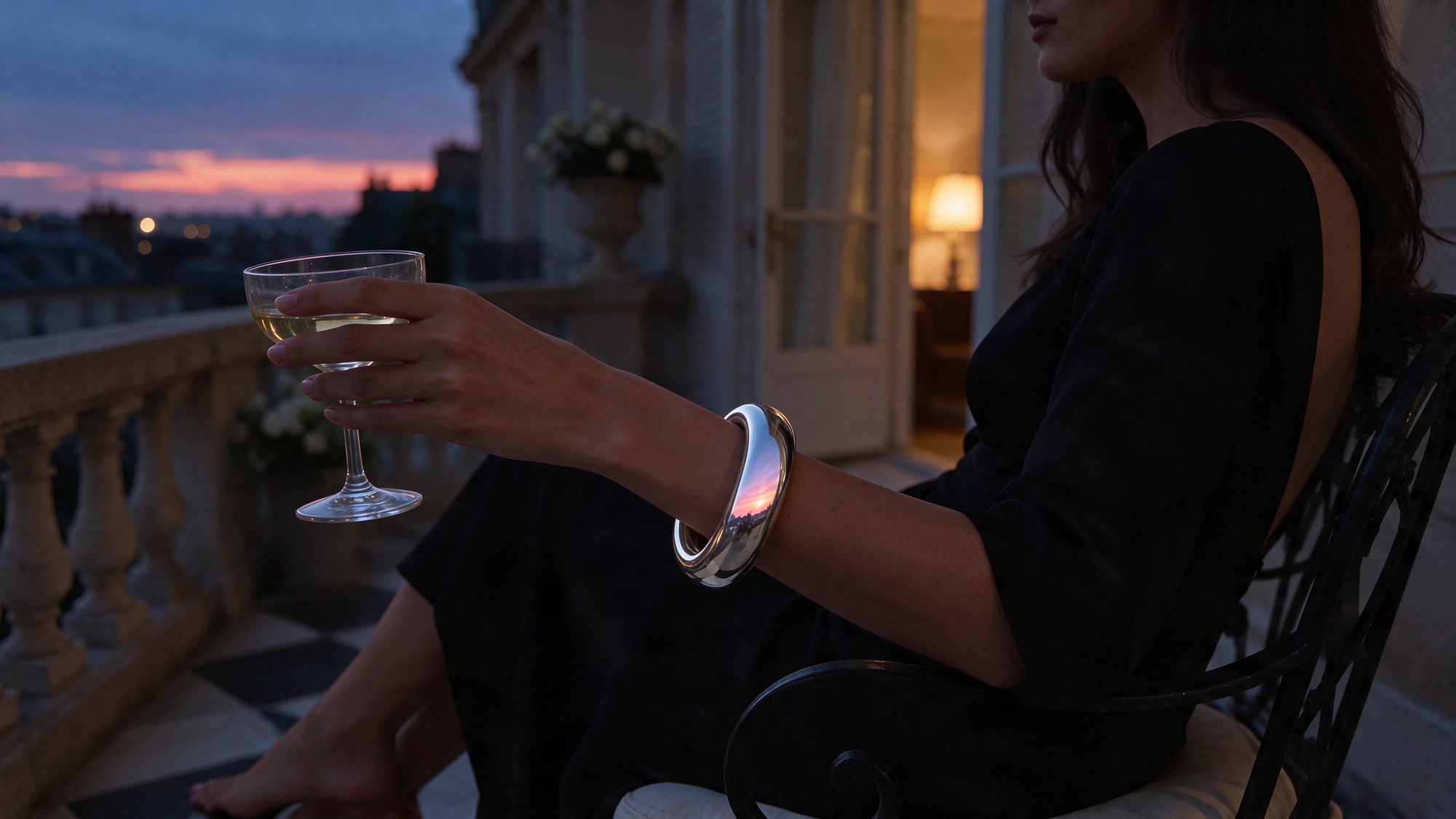
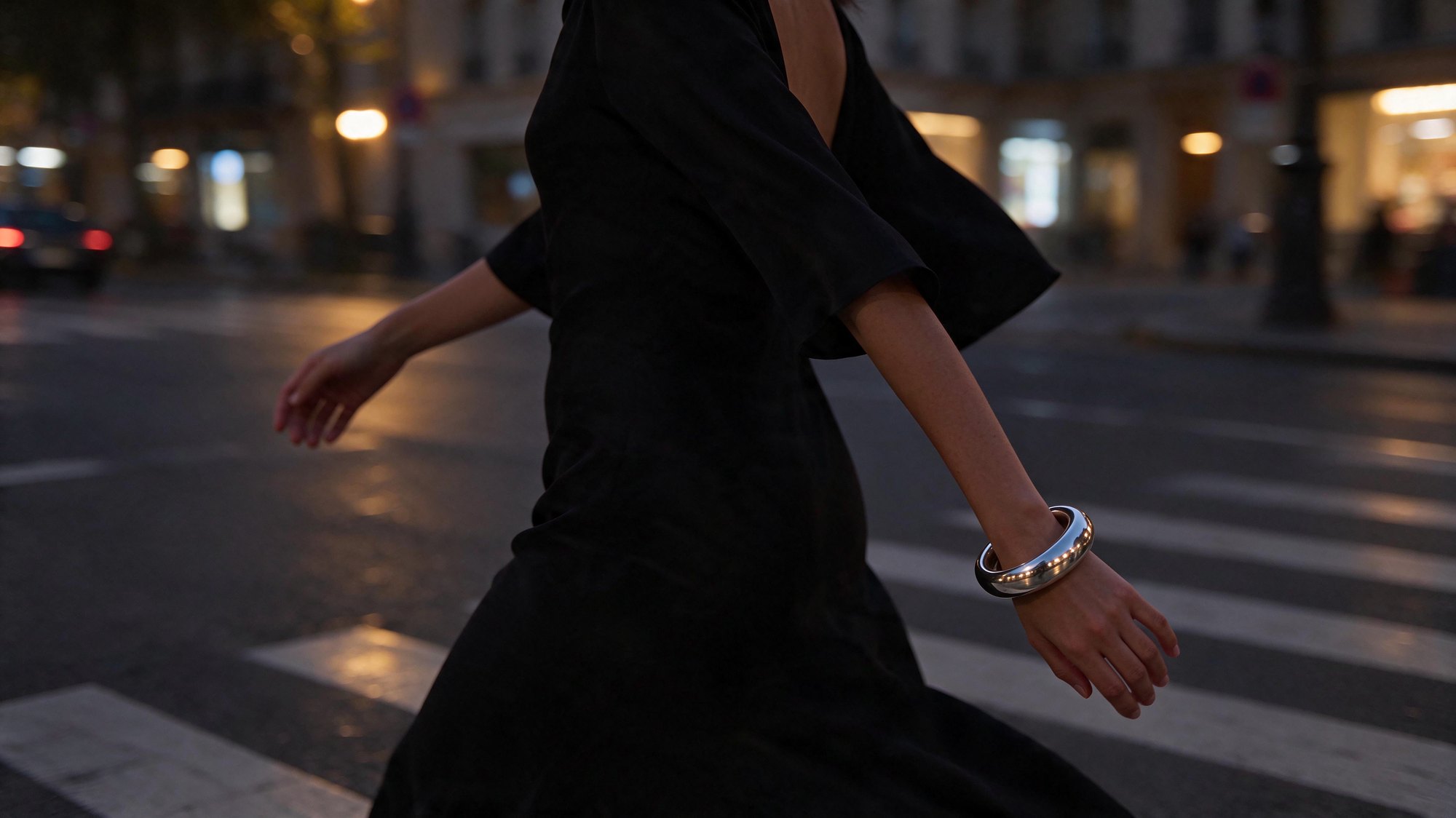
Polished silver reflects whatever stands in front of it. On a real shoot that includes the photographer, the lights and the flash. Here each reflection was treated as a small still life of the scene around it: the last band of sunset, a lit building on the street, the tiers of the opera house, a rose sky over the roofs.
One rule held throughout: nothing in the silver could look like a person. Several frames that were right in every other way were rendered again because a dark shape resembling a figure had appeared in the reflection.
True size and shape
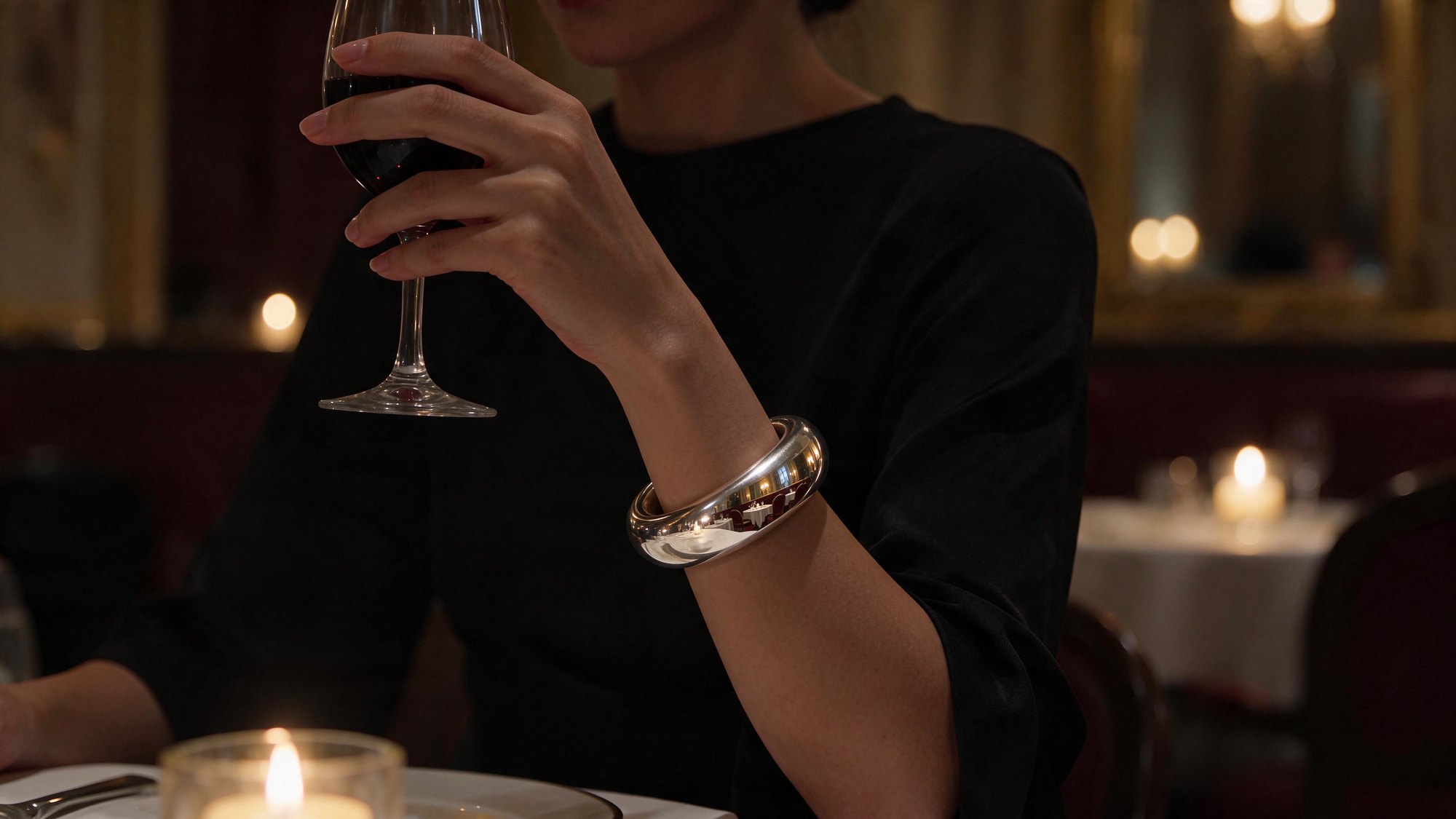
Each frame was then checked against photographs of the real bangle. Two things were measured: the thickness of the band against the width of the ring, and the width of the ring against her wrist.
Where the band came out too heavy or the ring too large, the frame was rendered again with that one correction. In two frames, the dinner and the balcony at first light, the bangle had been drawn more like a cuff. Those were rebuilt in two steps: the frame was rendered with a bare wrist, then rendered again with the bangle added. Nothing was painted over a finished image.
The result
Seven frames of one night, and one bangle carried through all of them. Nearly 300 frames were generated to get there.
The pictures were finished first. The poem on the series page was written afterward, to the frames as they stood.
Night out is a spec campaign. The woman and her evening are invented. The bangle is real; its maker isn’t named, and none of this was commissioned by or made with them. Images generated and finished by Finalbyte.