The Fitting
A spec campaign, told by the tailor
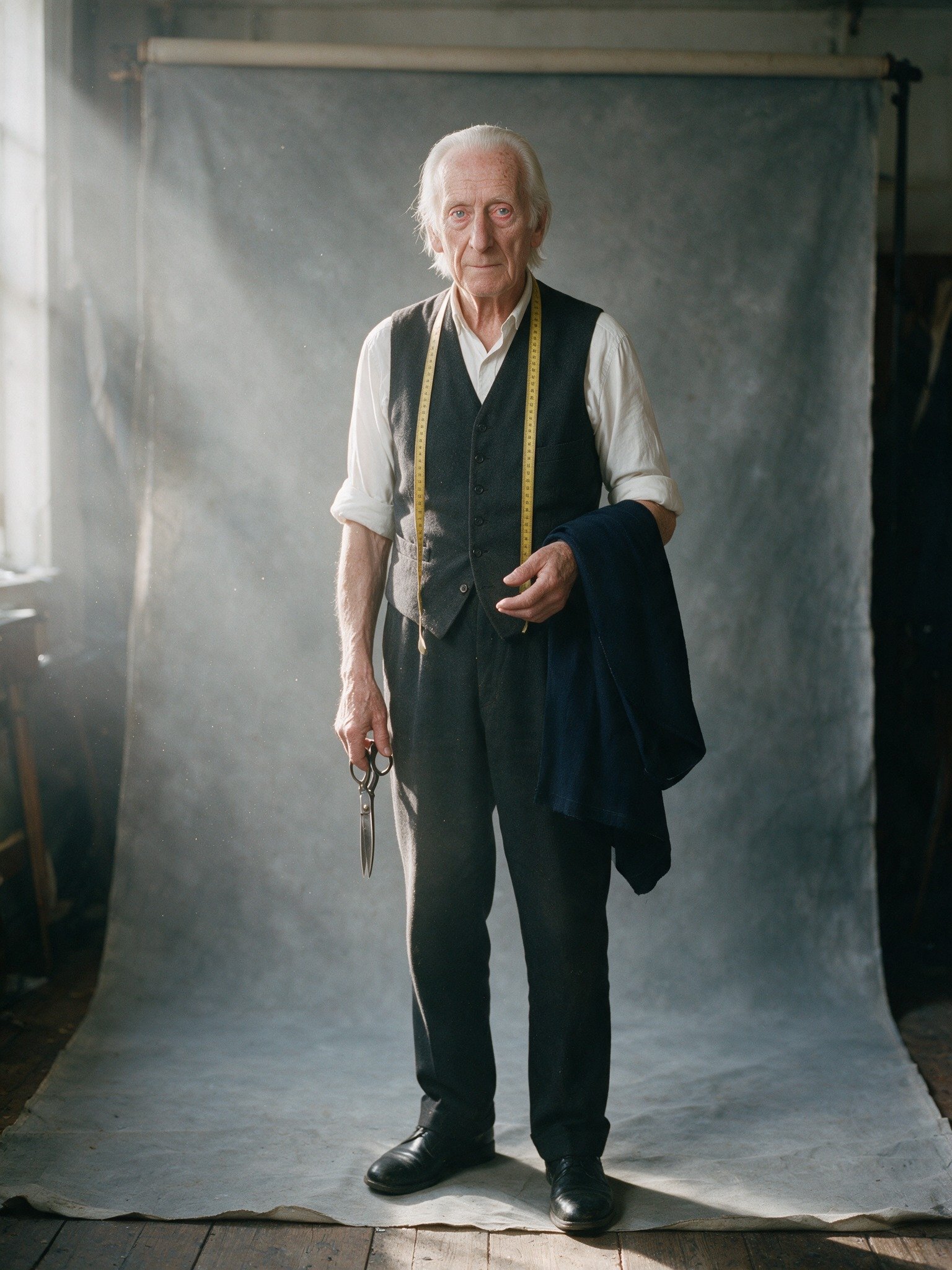
There is a board under the window with a drawer in it, and in the drawer there is a sheet of brown paper with a man’s name on it, in a hand that is not quite mine yet.
His daughter wrote to me in the winter. She said her father had been measured here, and gave the year, and asked whether I was still there. I wrote back that I was. I took the paper out the morning her boy came. I don’t know why. I knew what it said.
He stood where his grandfather stood. I didn’t tell him that. I put the tape across his back and read it and wrote it in the book, and the number was the one I was expecting, because I had written it once before, sixty years ago this spring, with a pencil the governor sharpened for me because my own hands were shaking.
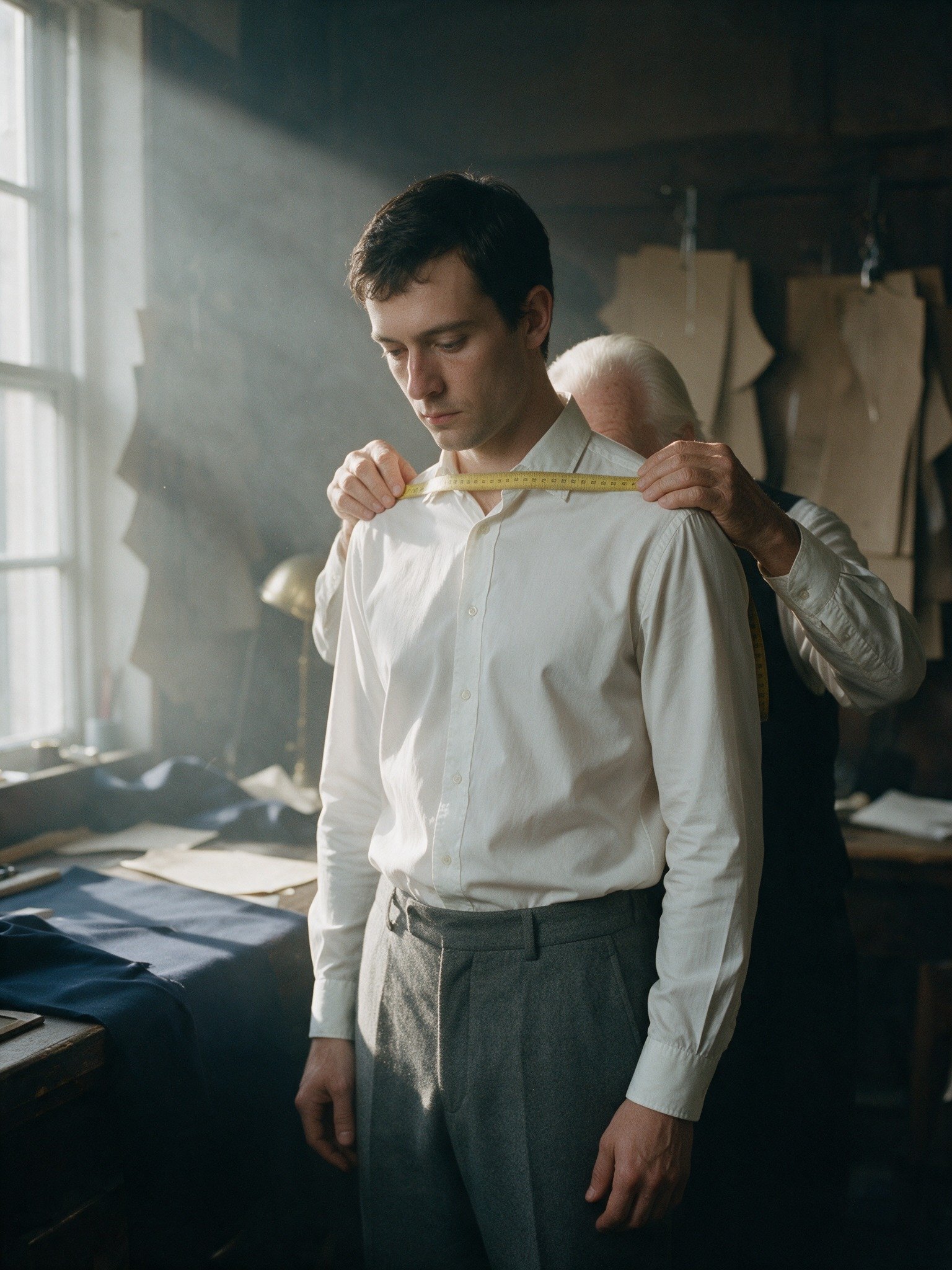
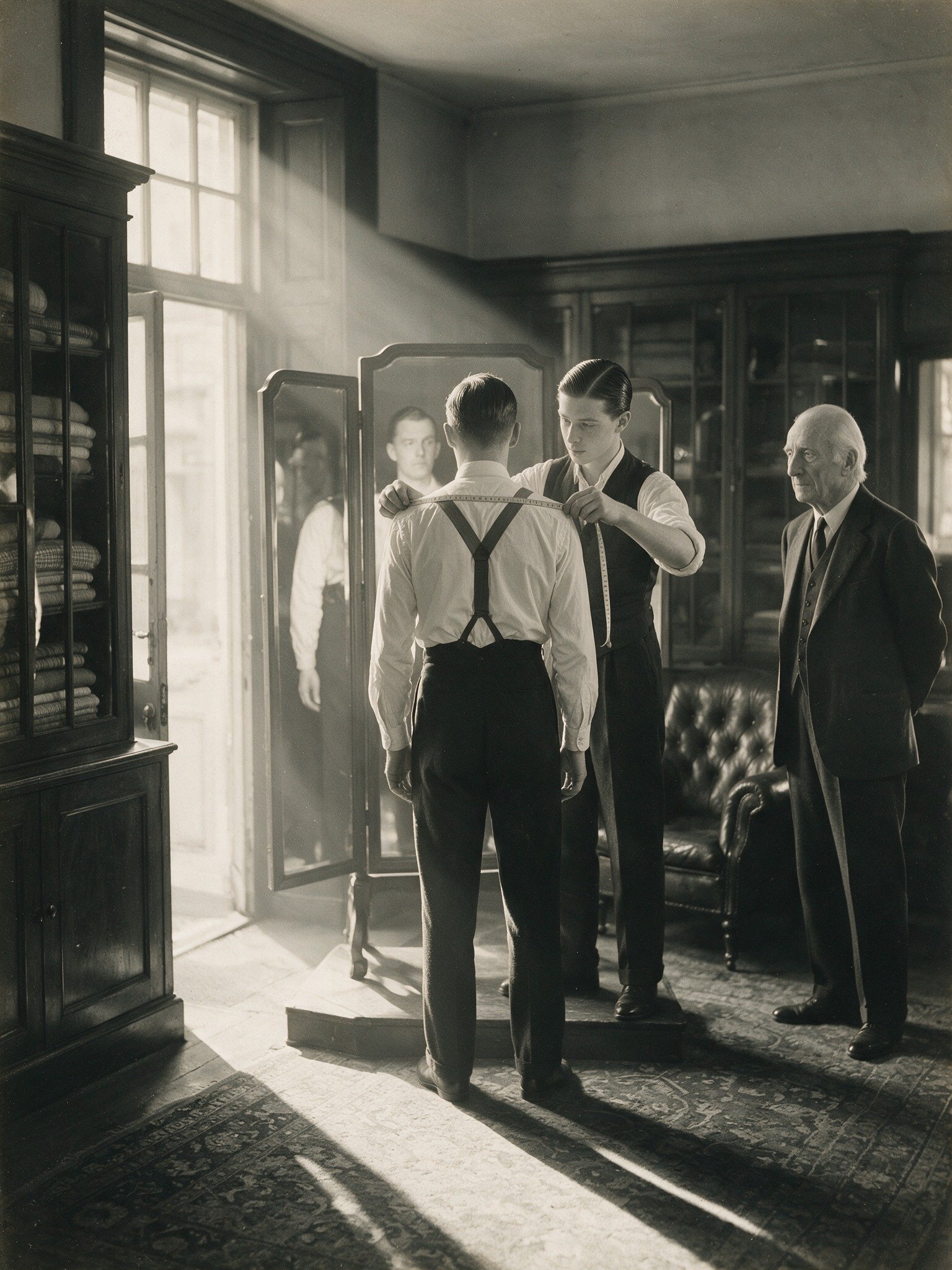
I was eighteen. The governor stood by the cabinets with his hands behind his back and let me take the measure myself. He had never let me before. The customer was a young man who could not keep still. He talked. He wanted to know what everything was for. He moved his arms when I asked him not to, and he watched himself in the glass the whole time, not out of vanity, I think, but because he had never seen himself from three sides at once and didn’t know which one to believe. I took the across-back twice because he laughed in the middle of it. The governor said nothing, which was how you knew. Afterwards, on the stairs, he said: left shoulder, it drops, you’ll cut for it. I hadn’t seen it. I have looked for it on every man since.
The grandson can keep still. He looked at the floor while I worked, which is the right thing to do and cannot be taught. His left shoulder drops a quarter of an inch. I wrote it down and said nothing about that either. You will understand that in this trade a great deal of what you know, you keep.
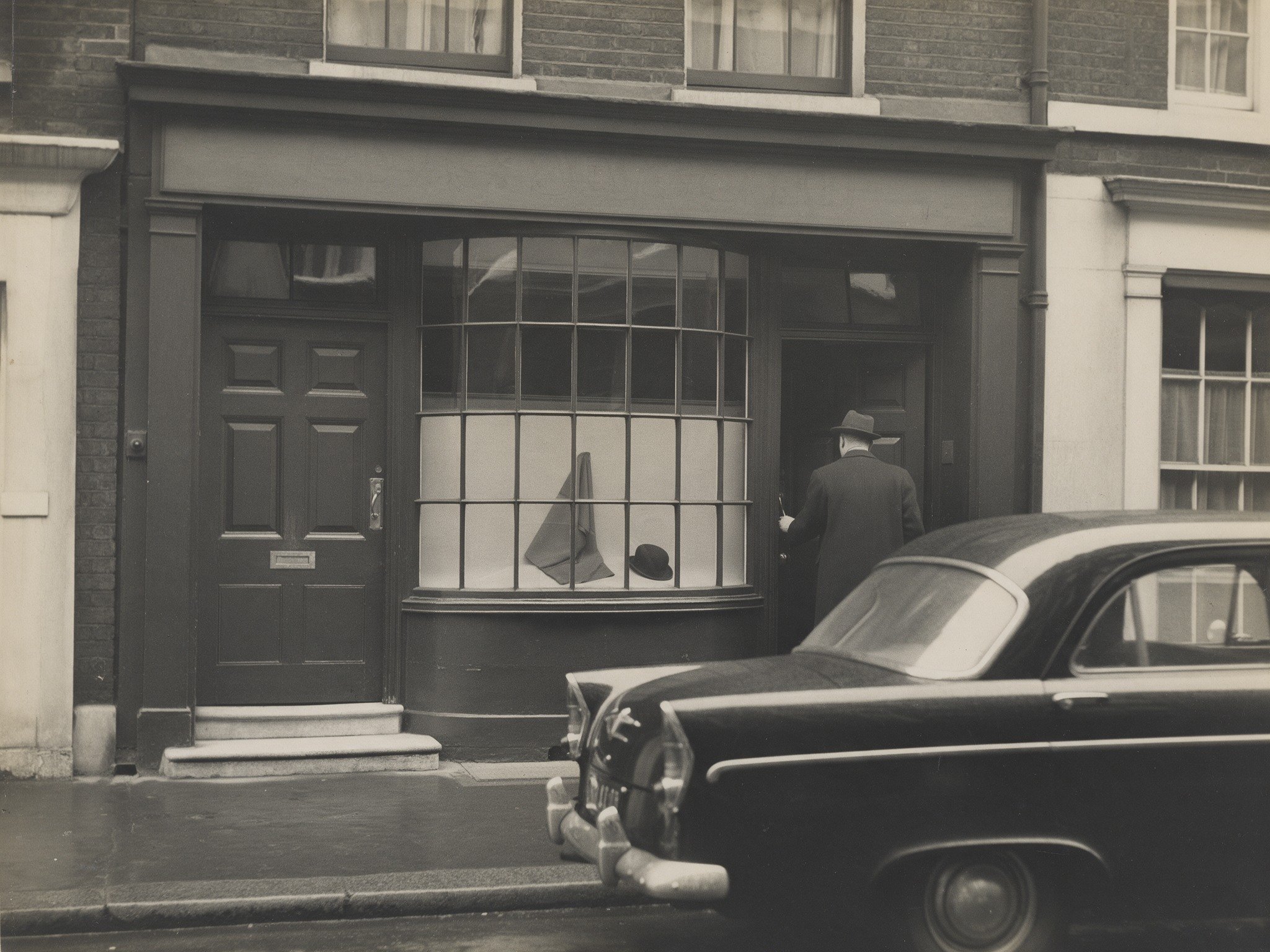
His mother chose the cloth before he came, from a bunch I sent her, and she chose what her father would have chosen without knowing she was doing it. A navy twill. A good weight, nothing clever in it. Navy is what people ask for when they have stopped wanting to be noticed and started wanting to be trusted.
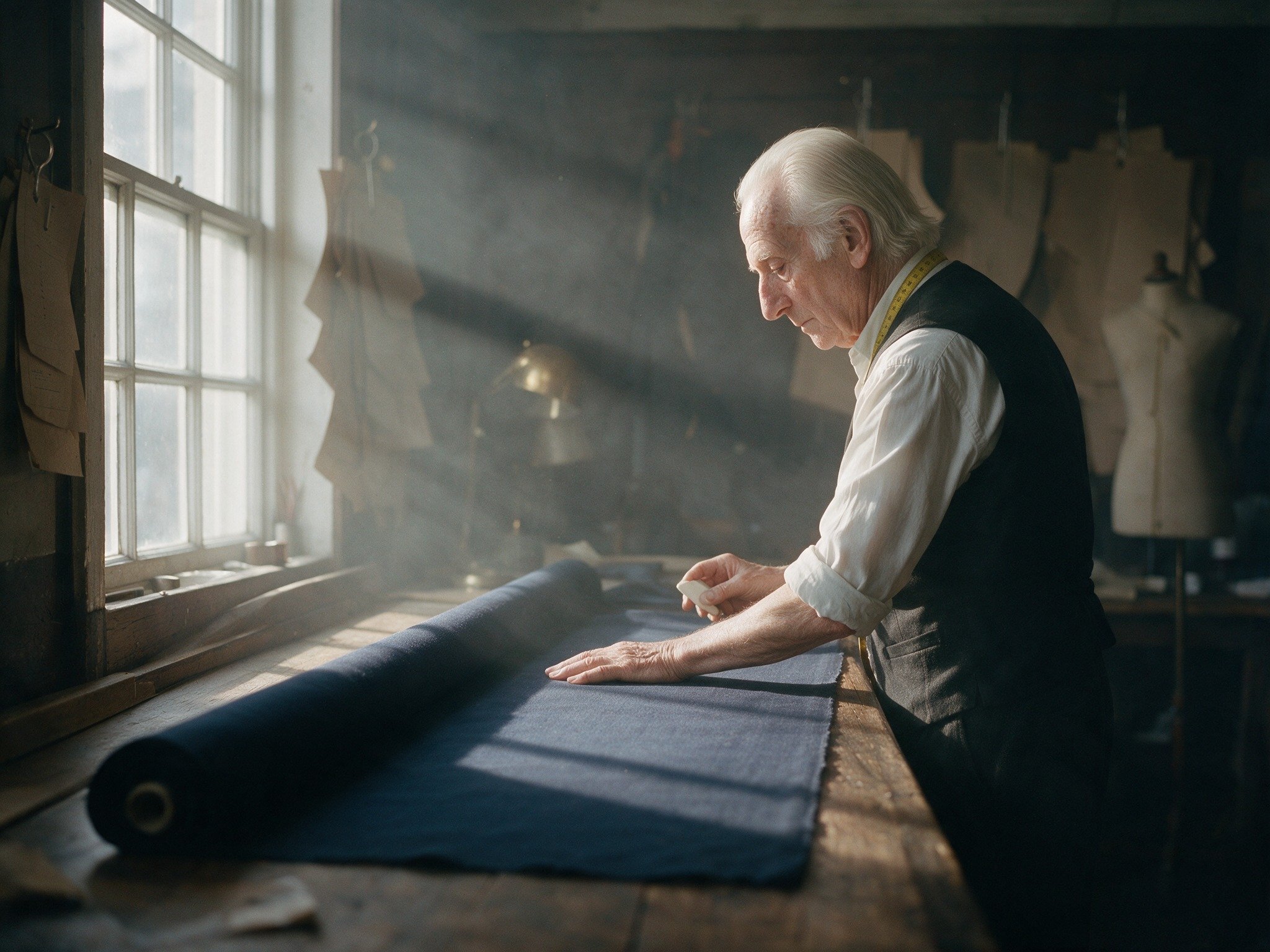
Cloth has opinions. People think it is a flat thing that does what it is told, and it is not. It has a grain and a memory and a side it would rather be on, and a twill more than most, because the weave runs on the slant and wants to pull. You lay it out and leave it a day before you chalk it, and if you don’t, it will tell you later, in the sleeve, when it is too late to argue.
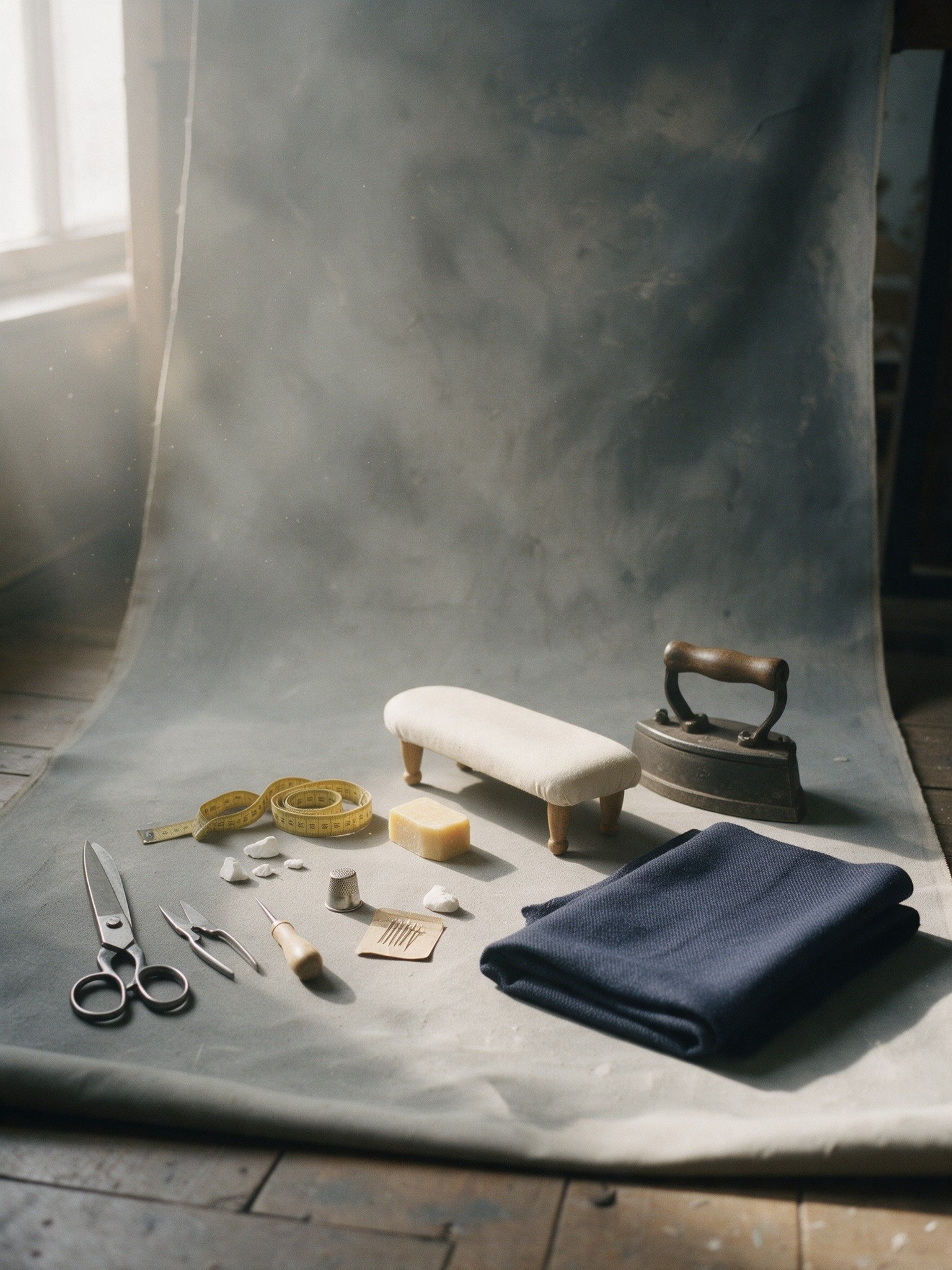
I unrolled it down the length of the board and put my hand flat on it. That isn’t for show. You feel for the nap, you feel for a flaw, and you feel what it wants to do. This one wanted to lie down and be a coat. Some of them don’t.
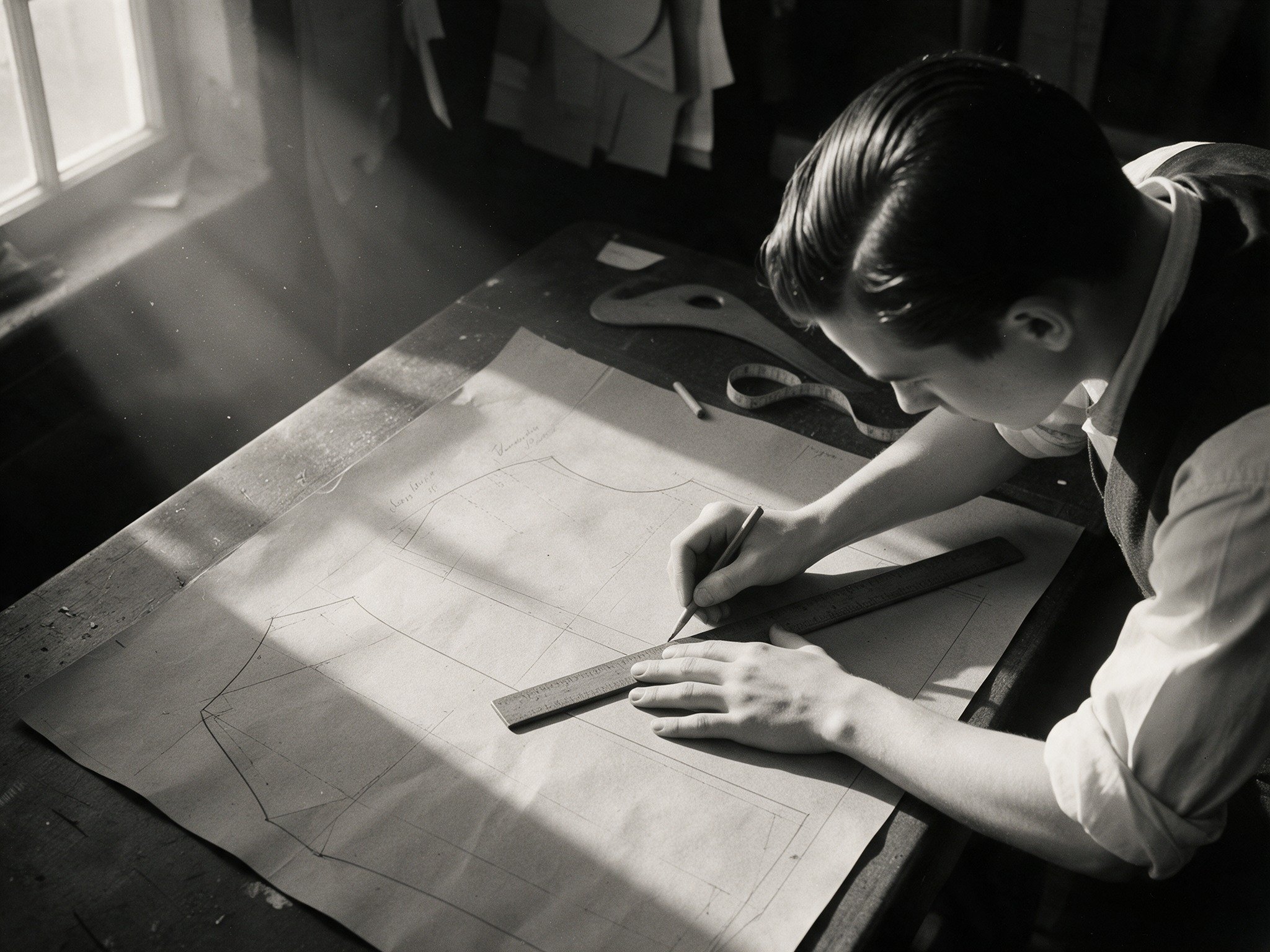
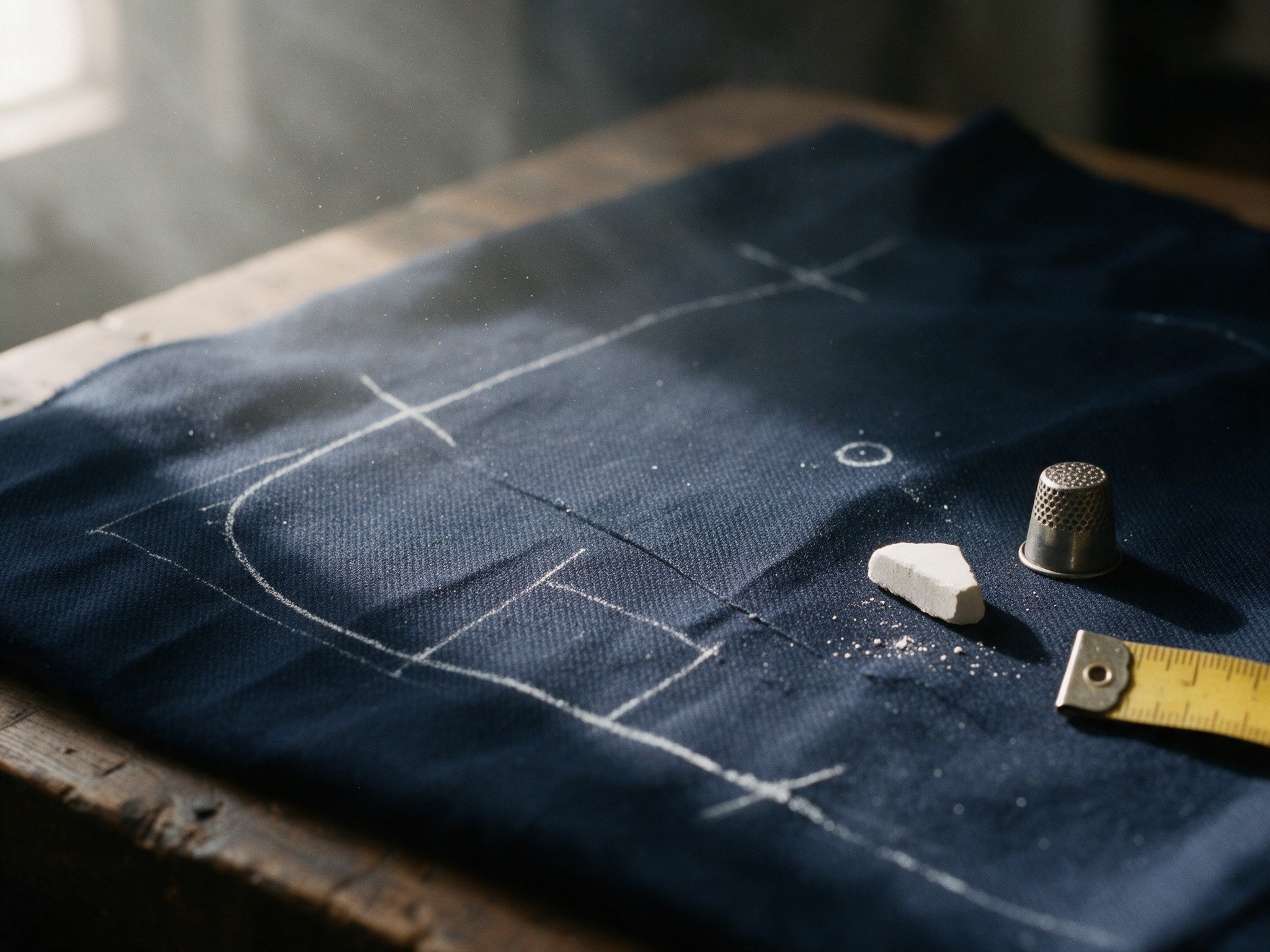
I drafted him on brown paper with a rule and a square and the pencil I keep in my waistcoat. The governor called it rock of eye and would not explain it, and I understand now that he couldn’t. I did not use the grandfather’s paper. You do not cut a man from his grandfather’s pattern. But I had it on the board beside me, the two of them side by side, and when I chalked the new one I went a quarter of an inch deeper at the left shoulder, and I didn’t need to look.
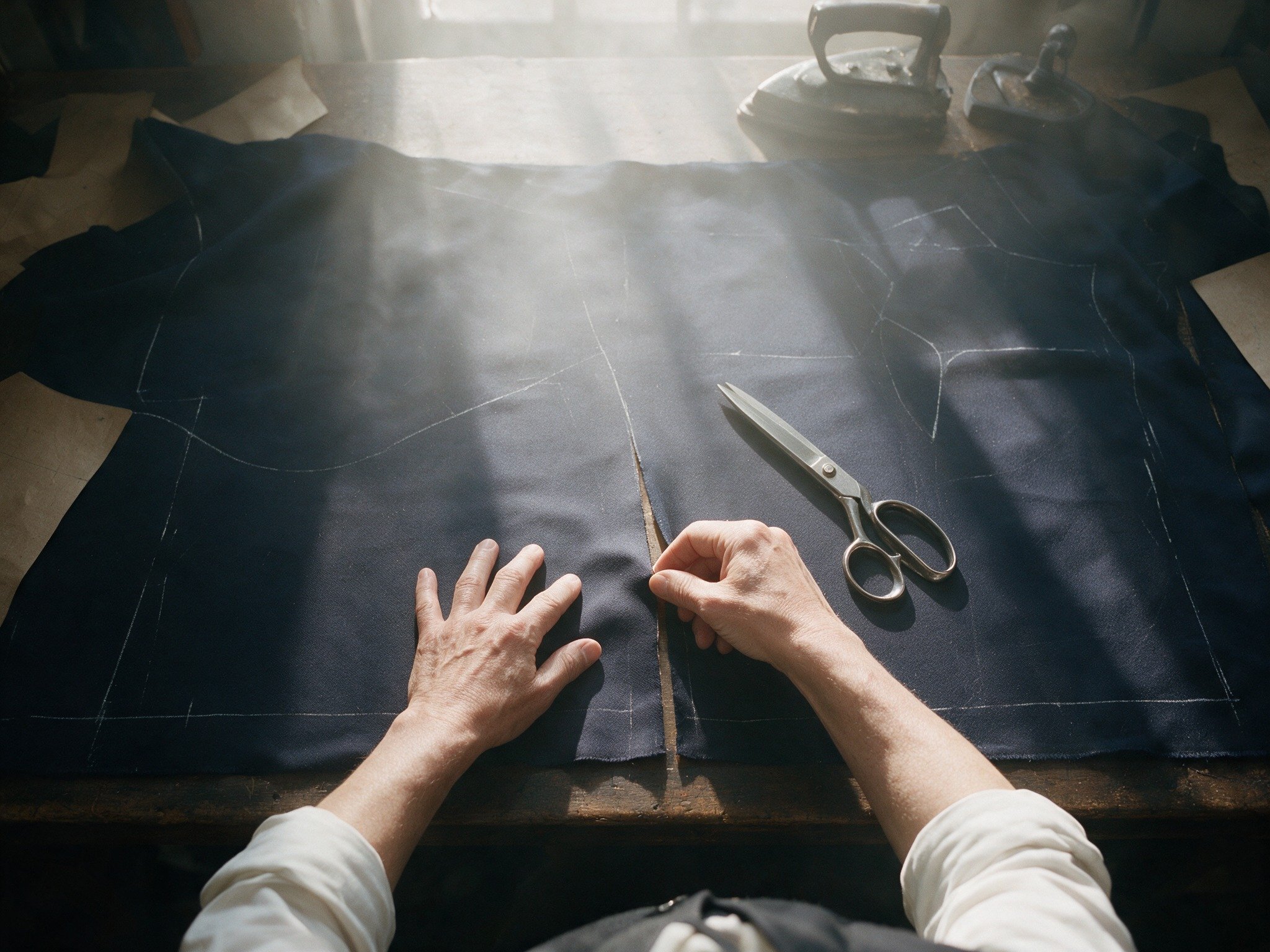
I cut in the afternoon, when the sun is on the board and you can see the chalk. When it was done I put the shears down and ran my fingers along the edge. You can feel a bad cut before you can see it. It was not a bad cut.
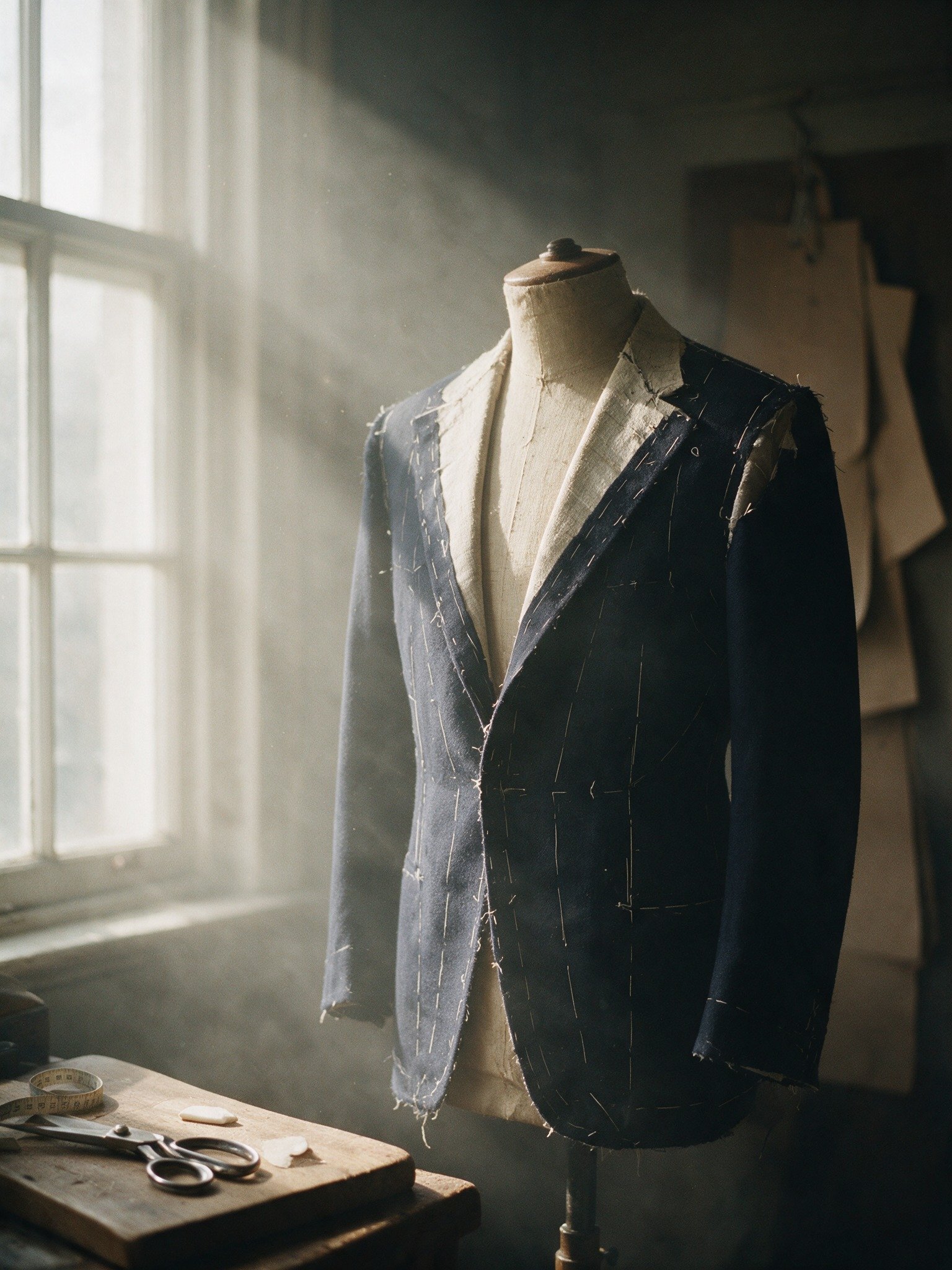
Three weeks on he came back and I put him in the baste. One sleeve in, one not, white thread everywhere, chalk on the shoulders, the canvas showing through at the chest. Nobody looks well in a baste. It is the only time a customer sees the thing undone, and the good ones understand that this is what they are paying for.
He didn’t say anything. His grandfather had said a great deal. He asked whether it was meant to look like that, and the governor said, it is meant to look like nothing yet, sir, and the boy went red to the ears. I thought that was unkind. I was eighteen and I thought a lot of things were unkind. Now I think it was simply true. He never forgot it either. His daughter put it in her letter, as a thing her father used to say.
I knelt at the hem with pins in my mouth, which I was told not to do on my first day and have done every working day since. I marked the balance. I took a little out of the back. I let the left shoulder in. You never get it right at the first fitting. If you do, you haven’t been looking.
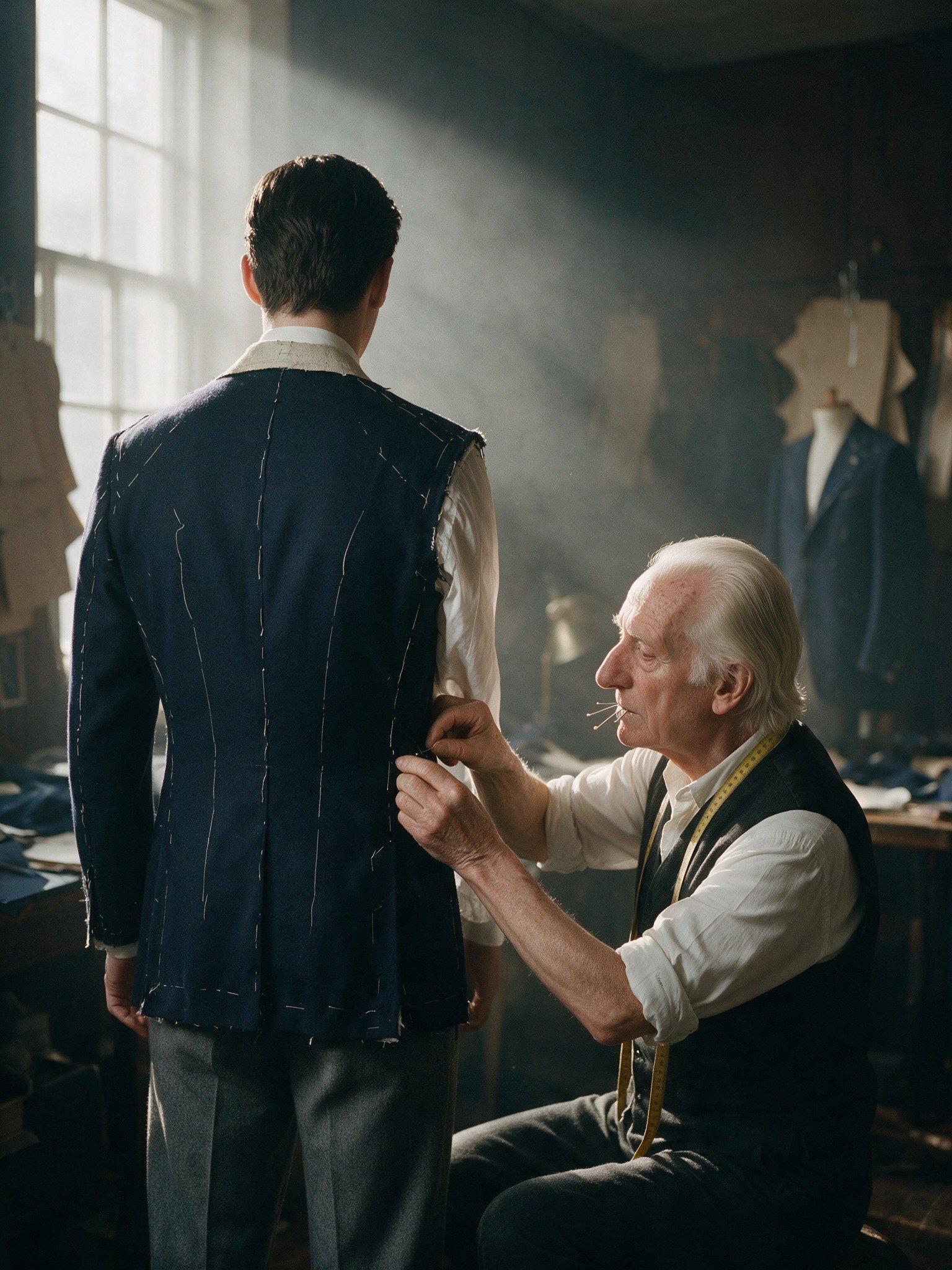
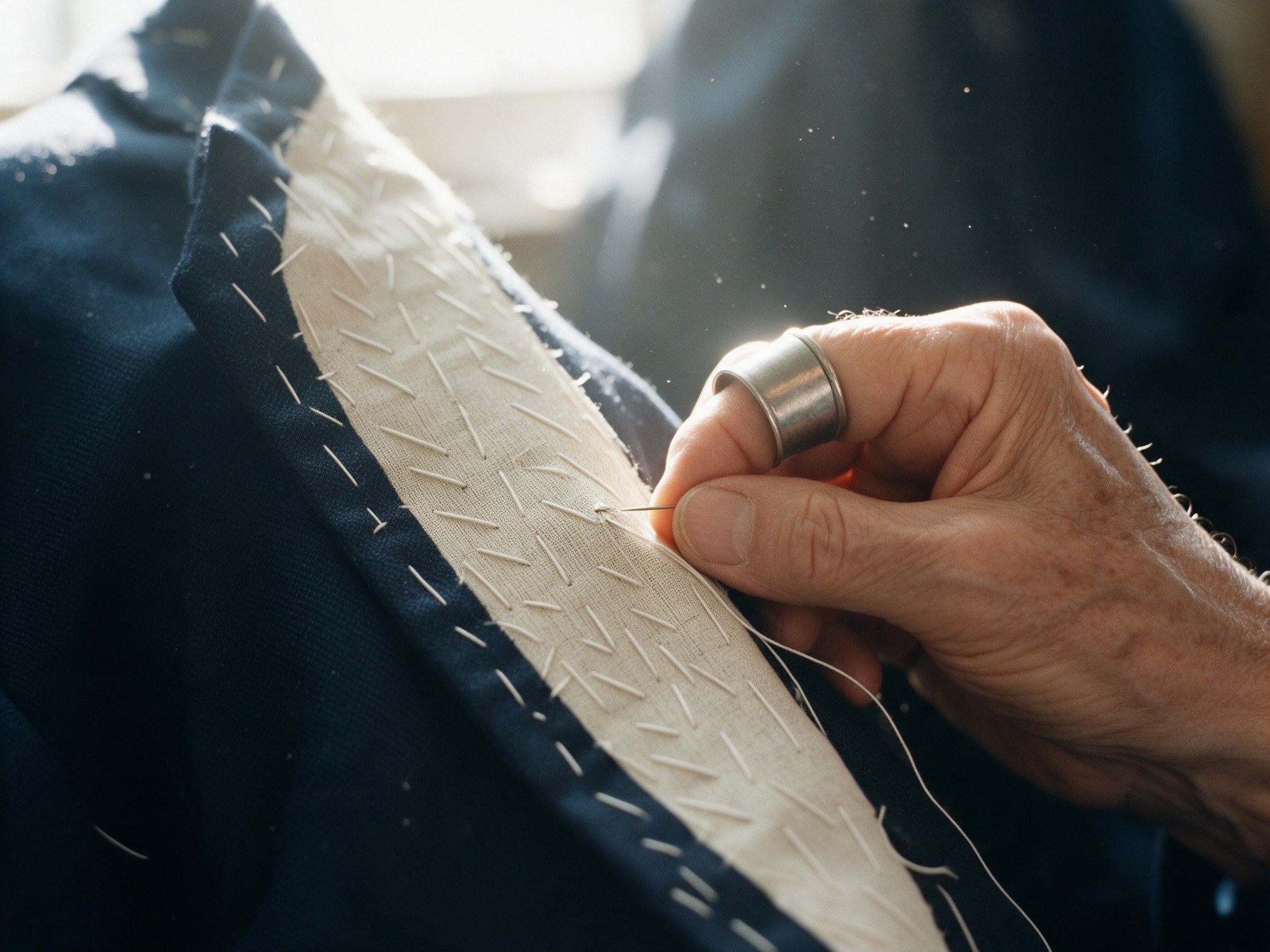
The coat is made sitting down, in the window, in the afternoon, and there is nothing to say about it that the hands don’t say better. I pad the lapel with hundreds of small stitches no one will see, so that it rolls and never creases. I put the canvas in. I set the sleeves. I make the buttonhole by hand. It takes me longer than it did, and I let it.
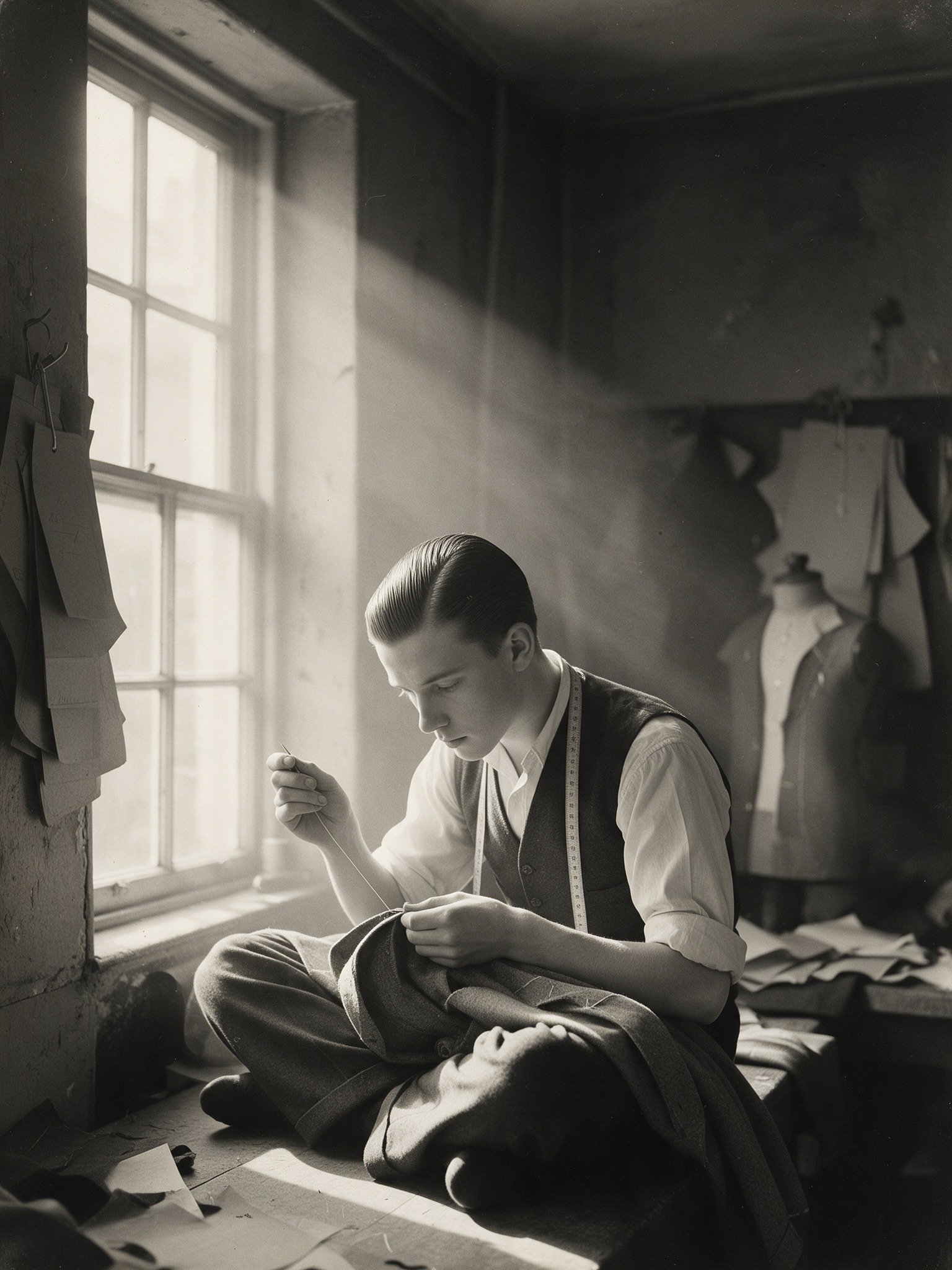
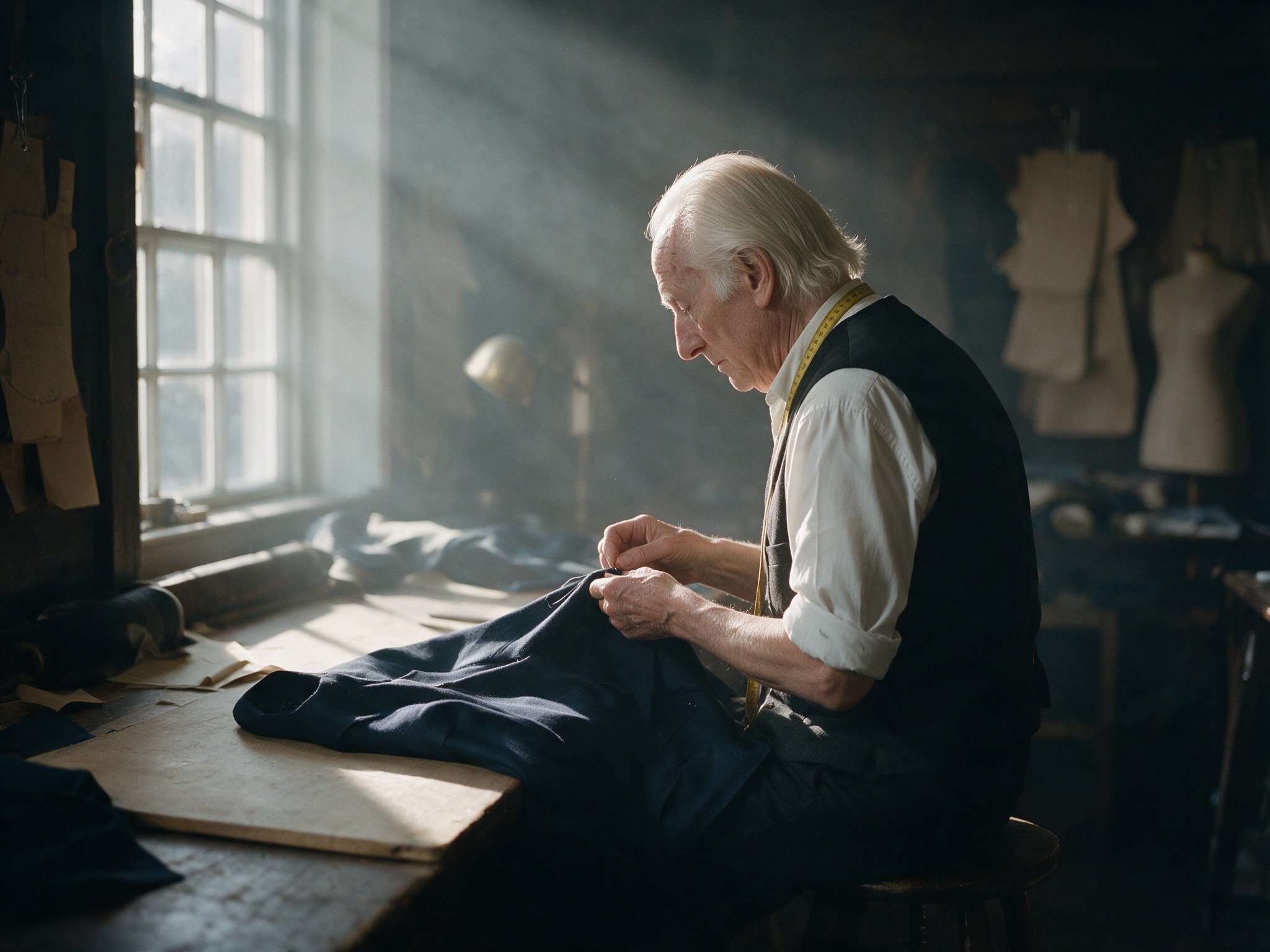
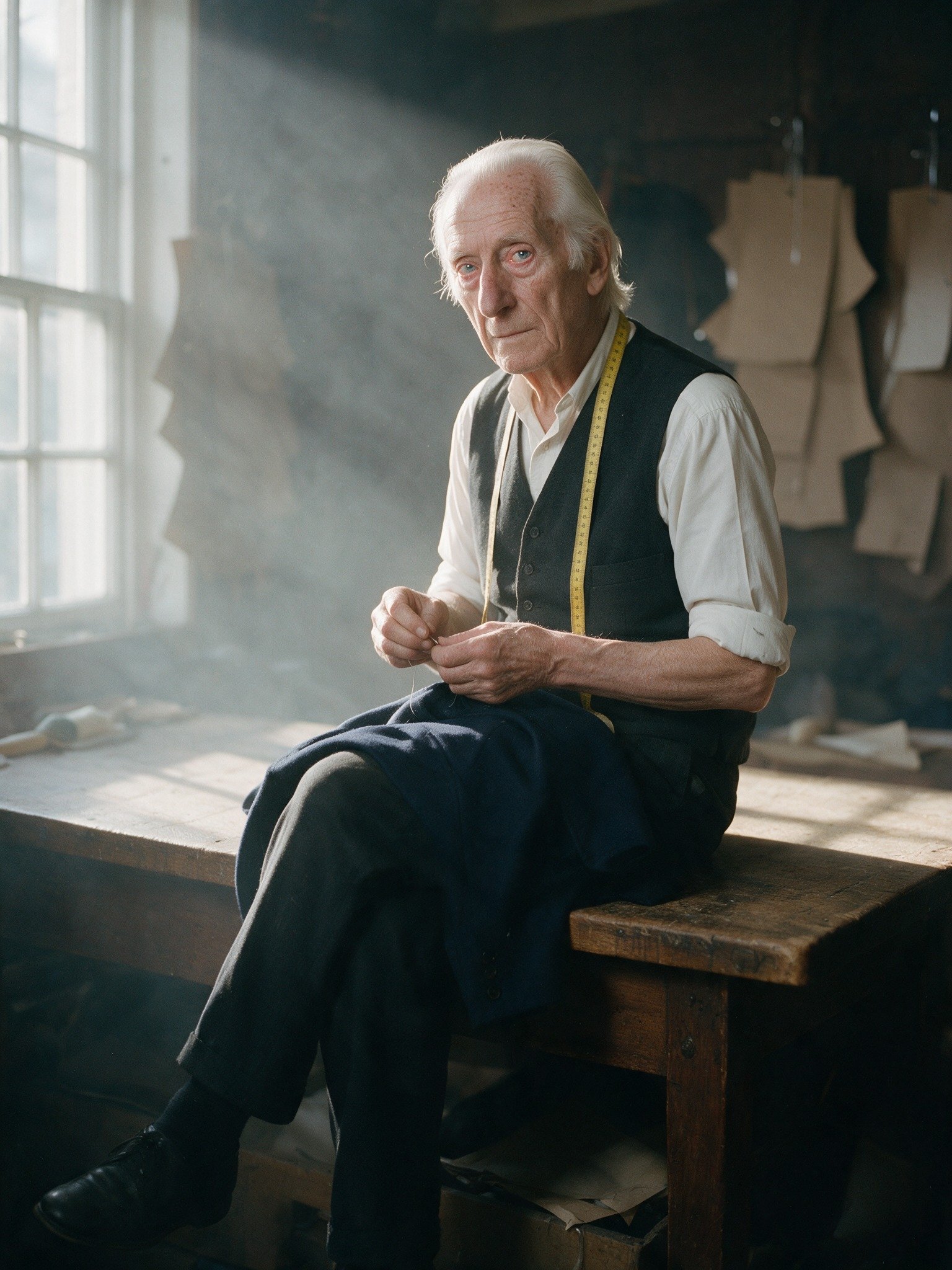
I used to sit cross-legged on the board like the rest of them, the whole row of us in the window like birds on a wire. There is a photograph of me doing it, at eighteen, looking at the needle as if it might go somewhere without me. I sit on a stool now, facing the window, with the work in the light. The light hasn’t moved. I have.
Someone asked me, the week I started this coat, whether it would be the last. I said I expected so. That was all that was said, and it is all I have to say about it here, except that I have taken more care with the buttonhole than I needed to, and I know it, and I don’t mind. His paper is in the drawer now, on top of the other one.

He came in on a Tuesday and put it on in the back and walked out into the shop and stood in front of the glass, where his grandfather stood. The three-way glass went years ago. There is one glass now, in a frame, and you see one side of yourself in it and take the rest on trust. He looked at himself and he didn’t move. His mother was with him. She is to see him married in a fortnight, and she didn’t look at him. She looked at me.
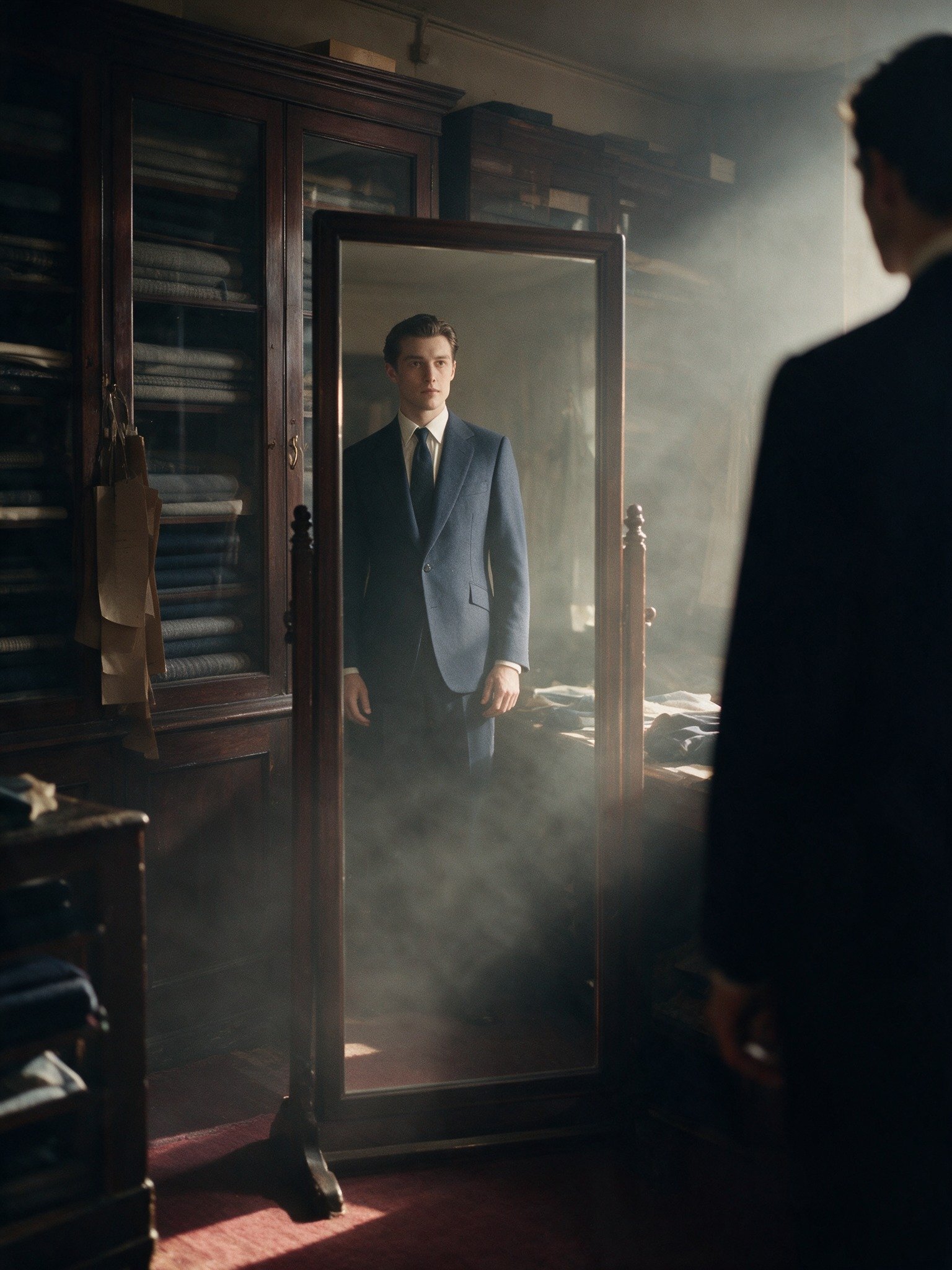
The coat does what it should. The shoulder sits. The lapel rolls to the one button and stays there. The skirt moves when he walks and lies down when he stops. I checked the back the way I check every back, with my hand, flat, once. Then I put my hands in my waistcoat pockets and left him to it.
His grandfather, when he stood there in his first proper coat, turned round and round and could not stop grinning, and asked the governor whether he looked like a gentleman. The governor said that was not the tailor’s department. I have thought about that answer for sixty years. I have decided he was wrong, and it is too late to tell him.
The boy said thank you. He said it to the glass, and then he turned round and said it to me. His grandfather never once kept still long enough to say it to anyone, and I liked him better for it then, and I find I still do.
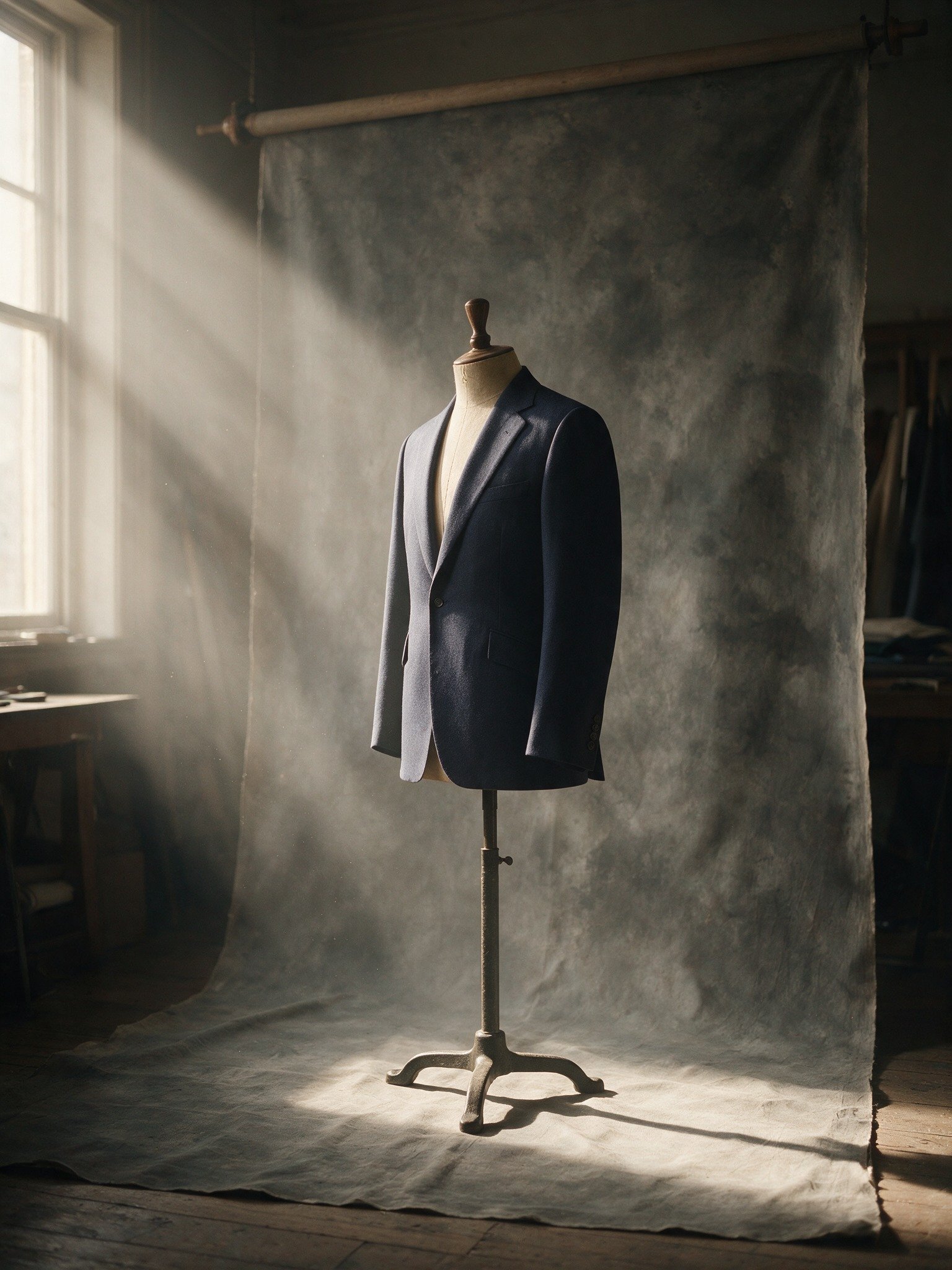
The Fitting is a spec campaign. The tailor, the family and the story are invented. The suit is real; the brand isn’t named, and none of this was commissioned by or made with the clothing’s maker.
Images generated and finished by Finalbyte.